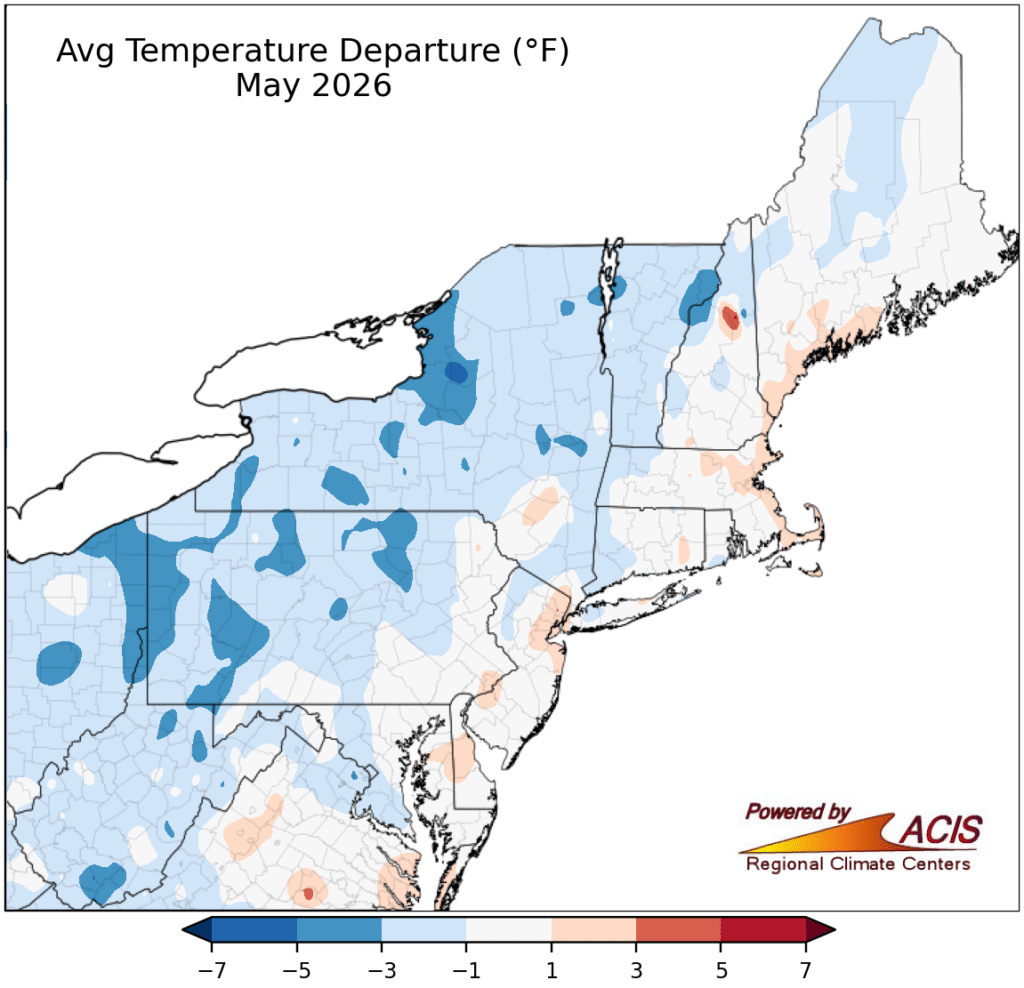
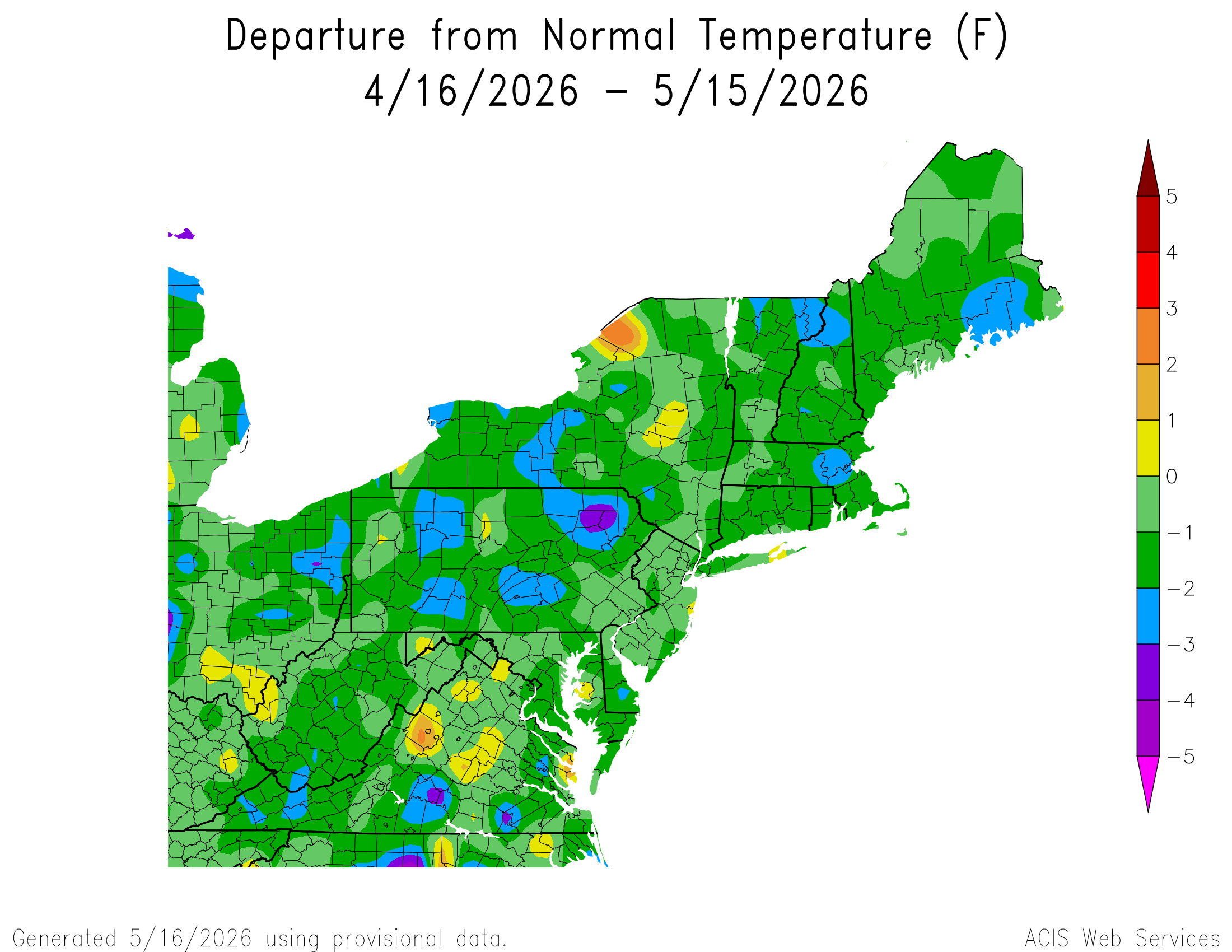
May 2026 was cooler than average for much of the Northeast, but the past week or two have seen warmer temperatures, though that might change this weekend.
Cooler temperatures were the norm for May 2026, with most of the region being at or below average temperature. Image provided by the Northeast Regional Climate Center.
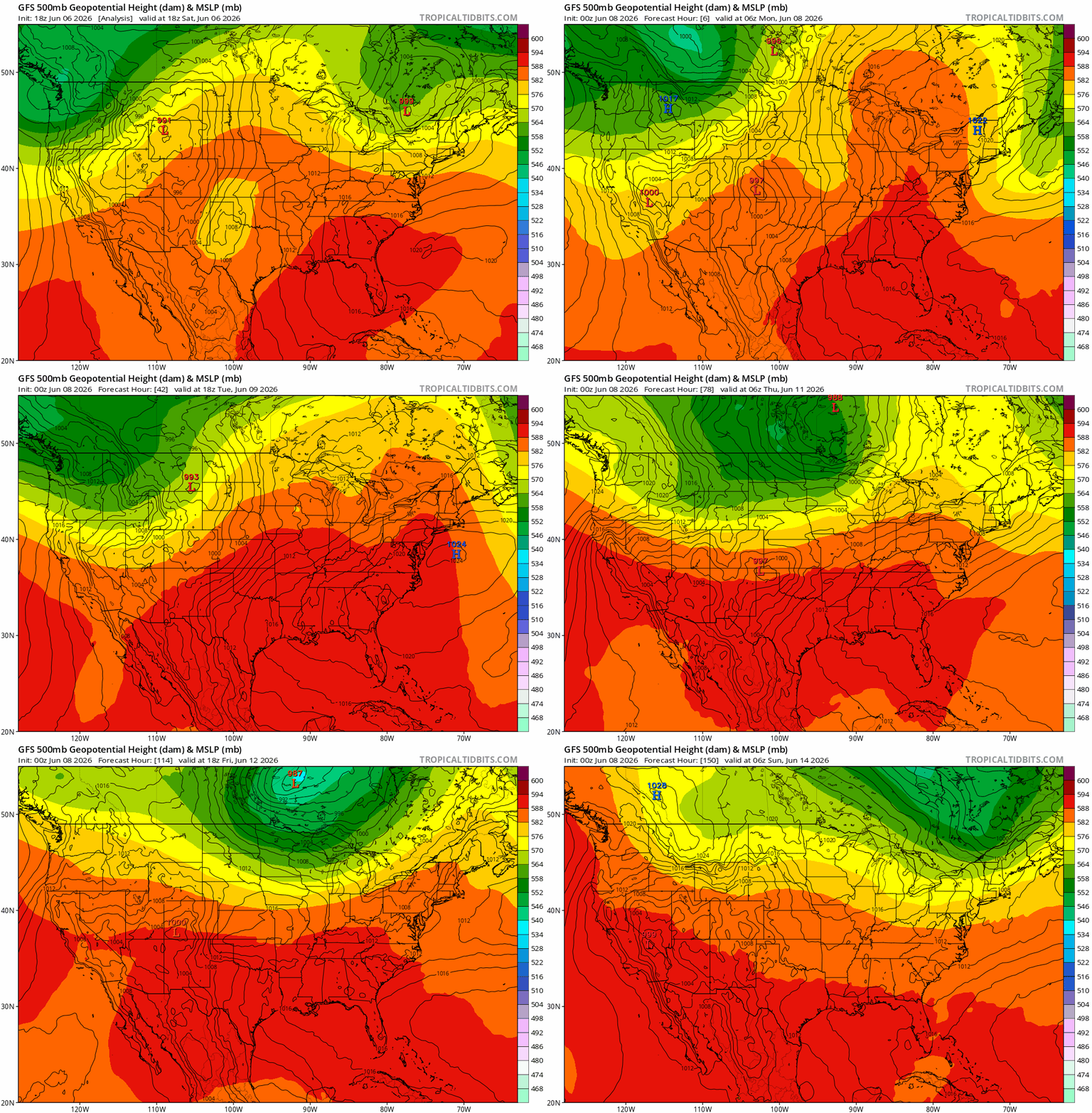
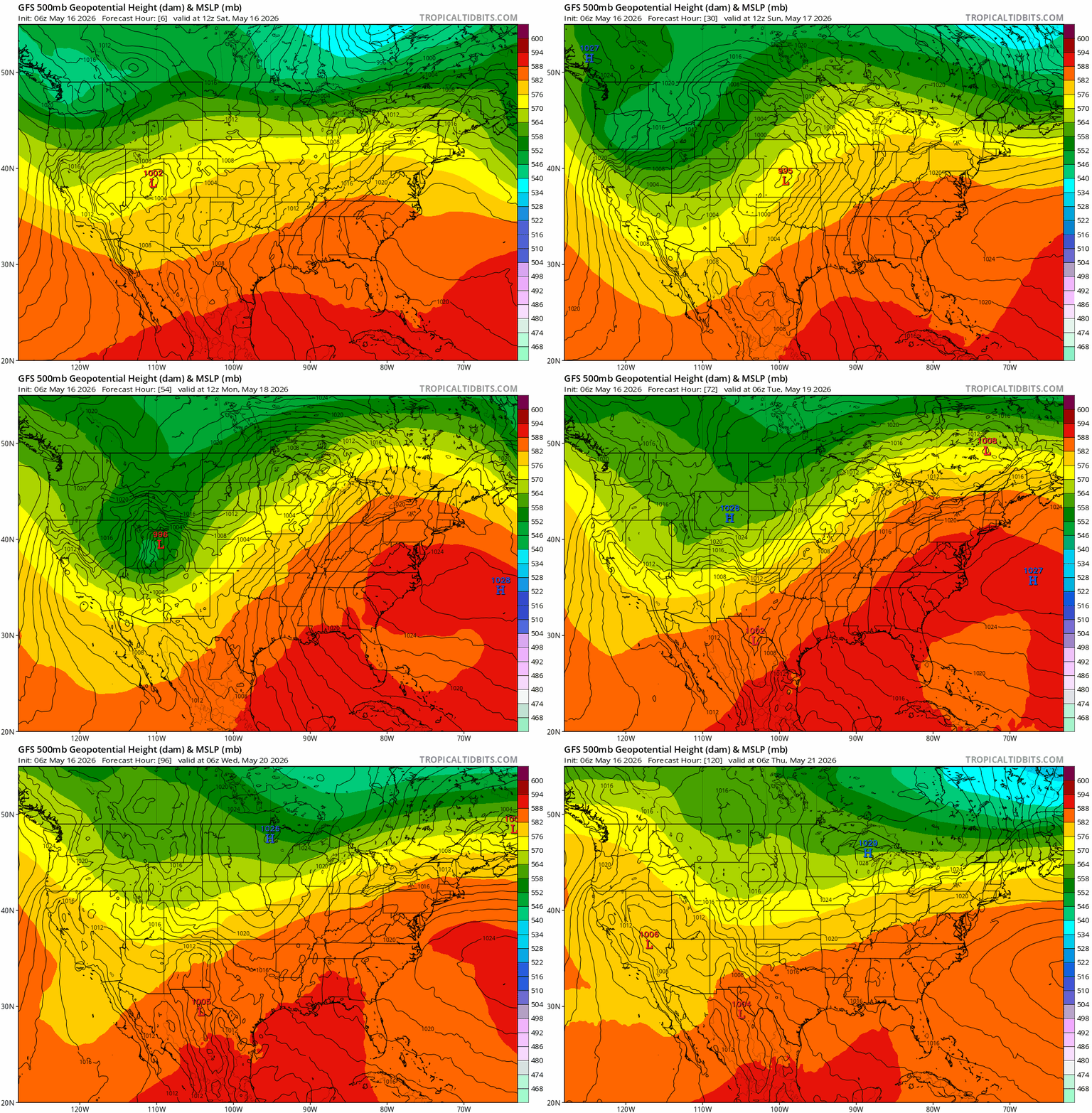
A back door cold front is moving through the northeast, bringing short relief from the heat, but a ridge of high pressure in the north central US is giving way to severe weather expected to move across the northern US. Temperatures in the 80s and 90s are expected until the weekend, as a large area of low pressure follows the severe weather, bringing highs in the 60s to 70s for the East, and potentially into the 50s in the Central US.
A High pressure ridge over the Central US gives way to severe weather, followed by lower pressure over much of the northern US. Loop provided by Tropical Tidbits
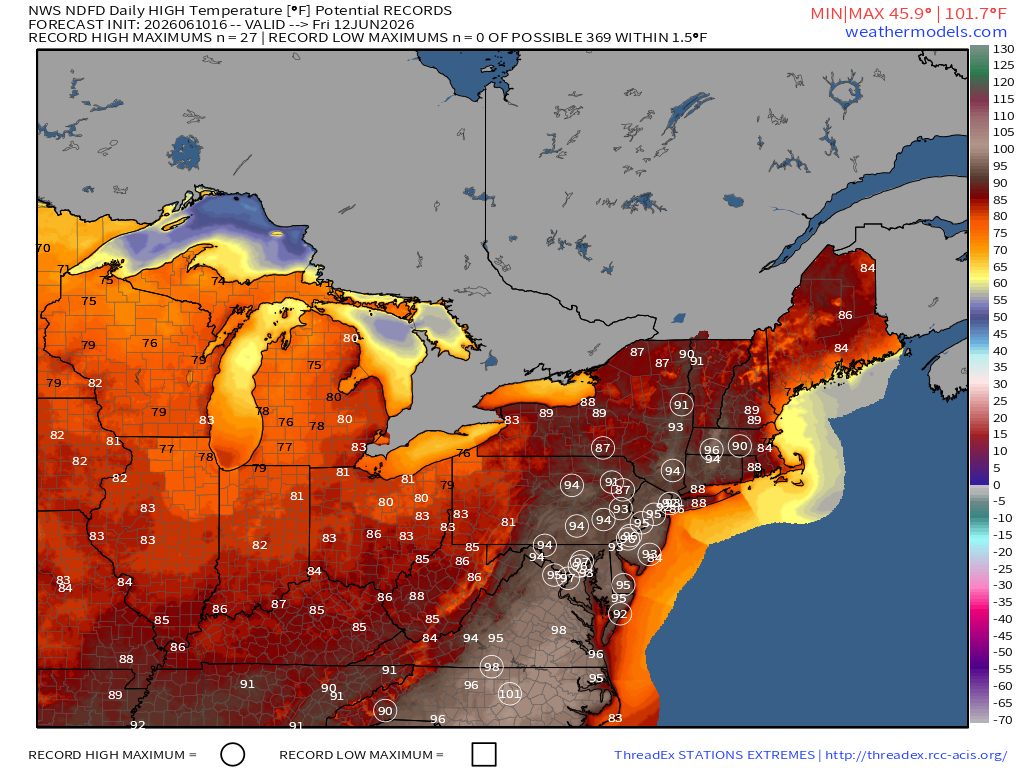
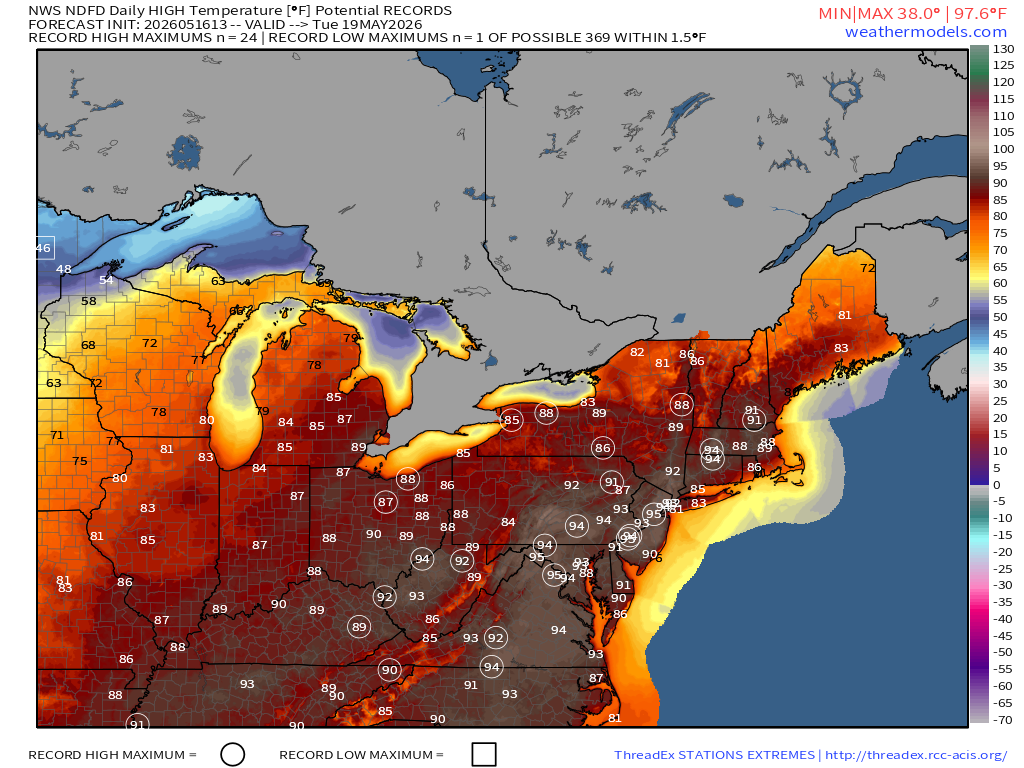
The warmest weather is expected on Thursday and Friday, as the high pressure sets up offshore, bringing warm humid air up the coast. Records could be set once again along the I-95 corridor, with temperatures well into the 90s, potentially reaching triple digits in North Carolina. Water temperatures along the coast have warmed up, with temperatures in the 50s and 60s along New England and into the 80s along the Southeast and Gulf Coast, providing some relief for people heading to the beaches. Cool temperatures should return over the weekend as a cold front moves through the region.
Record highs are expected through eastern US on Friday as a high pressure ridge sets up off the coast. Image provided by Weathermodels.com
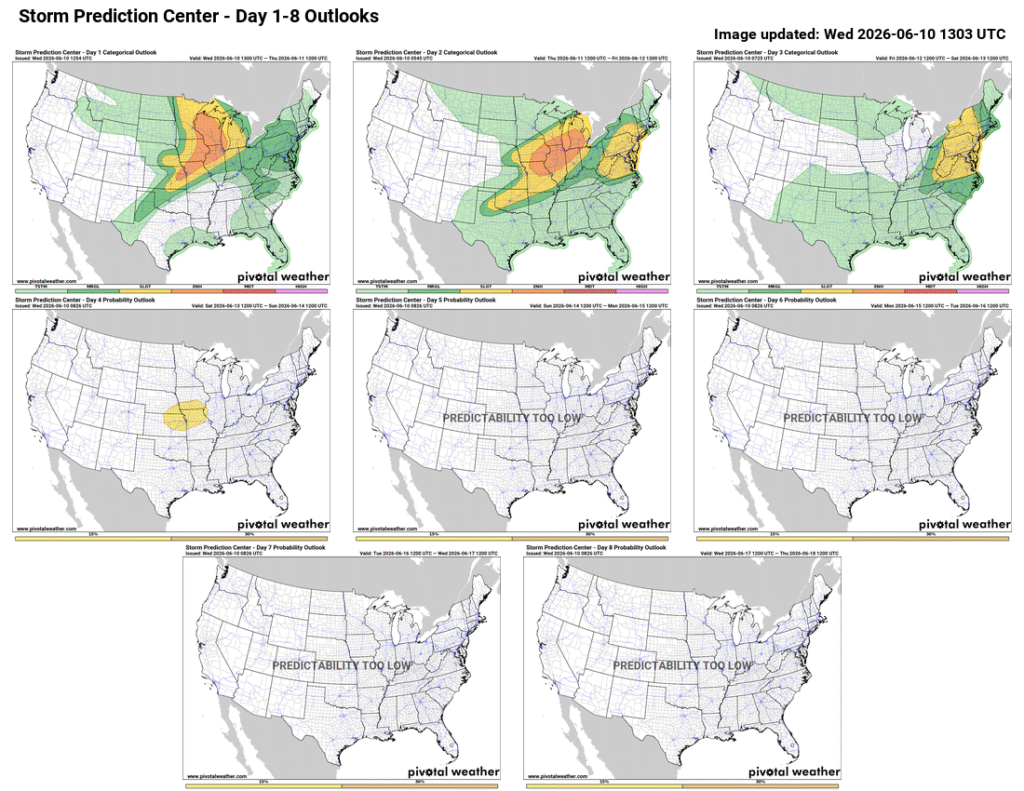
While the Eastern US can expect severe weather on Thursday and Friday, most of the Midwest is looking at severe weather continuing into Thursday.
Severe weather is likely to continue in the Central US Wednesday and Thursday, with the East Coast expecting some on Thursday and Friday. Image provided by Pivotal Weather
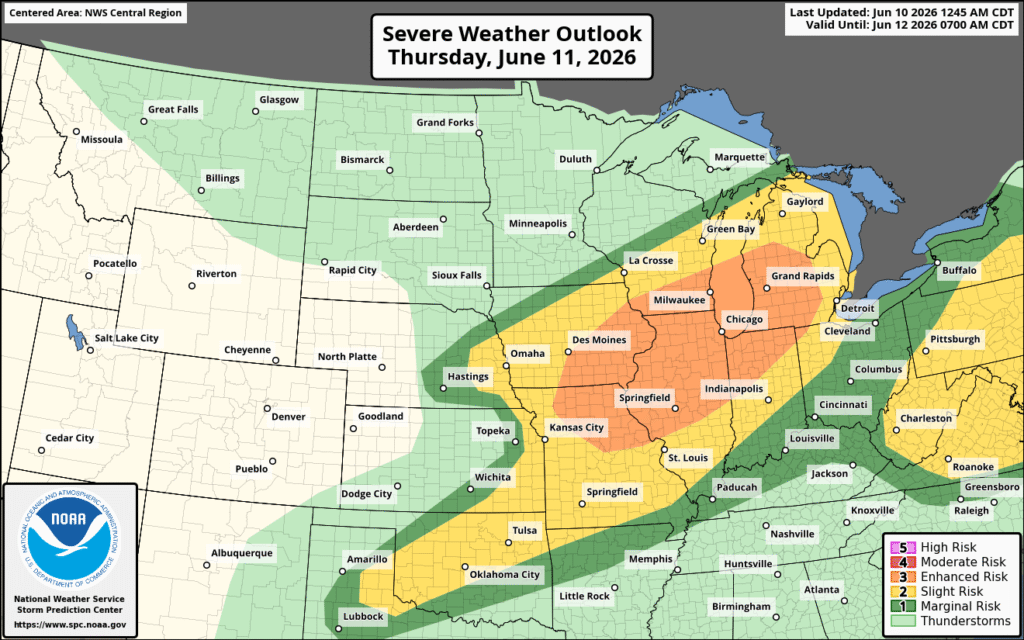
A low pressure trough pushing through a high pressure ridge promoted development of severe weather Tuesday night, which is expected to continue into Wednesday night and Thursday. Strong to severe thunderstorms are likely from the Central Plains northeastward into the Great Lakes, with an area developing along the East Coast on Thursday. Today, much of the Midwest can expect severe weather to continue, bringing strong winds, hail, and potentially tornadoes to the region, with a stronger wind threat Thursday, alongside continued hail and tornado risks.
The North Central Plains and Upper Midwest are looking at several rounds of storms tonight into Thursday. Image provided by NOAA.
As the system moves through, high pressure builds in behind it, bringing cooler temperatures and calmer weather. The East Coast can expect cooler weather on the weekend as the high makes its way to the region.
Much of the Spring has featured an upper-level trough of low pressure across the Northeast, but that will change this weekend.
Temperatures have been below normal across most of the Northeast since mid-April. Image provided by the Northeast Regional Climate Center.
A persistent trough of low pressure has kept temperatures below normal across the Northeast for much of the past several weeks, but a ridge of high pressure will build in this weekend, both at the surface and aloft, resulting in some much warmer weather. Temperatures will get well into the 70s and 80s this weekend, with some spots topping 90. A weak backdoor cold front will bring cooler weather to parts of New England Sunday night and Monday, with temperatures only in the 60s and lower 70s, especially near the coastline, but inland areas, especially outside of New England, should get well into the 80s and lower 90s.
A ridge of high pressure will build into the East over the next few days. Loop provided by Tropical Tidbits.
The warmest weather is expected Tuesday and Wednesday with high pressure anchored offshore. Southwest winds will bring warm and increasingly humid air to much of the East Coast, with high temperatures well into the 80s and 90s, likely setting records in many locations along the Interstate-95 corridor. Anyone heading to the beach for relief should remember that the water is still relatively cold as it is early in the season. Water temperatures are only in the 40s and 50s off the coast of New England, and 50s and 60s off the Mid-Atlantic coastline. A strong cold front will bring an end to the heat later Wednesday, possibly with some strong to severe thunderstorms accompanying that front.
Record highs are possibly in many locations in the Northeast Monday through Wednesday. Image provided by Weathermodels.com
While areas in the East Coast are looking at the potential for severe weather on Wednesday, many spots in the Plains states and Midwest could see several waves of severe weather over the next few days.
A multi-day severe weather event is likely across the nation’s mid-section. Image provided by Pivotal Weather.
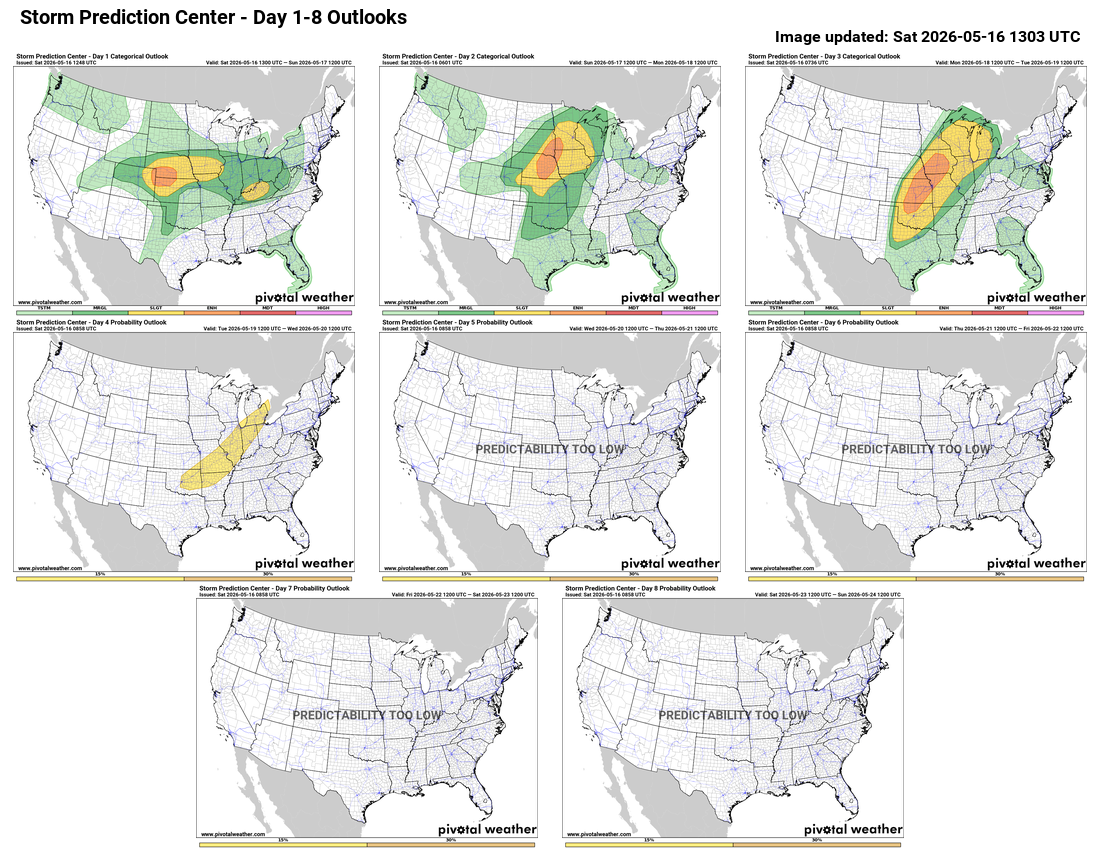
Low pressure developing in the southwestern Plains states will only slowly move northeastward over the next few days. Strong to severe thunderstorms are likely this afternoon and evening from the Central Plains eastward into parts of the Mississippi and Ohio Valleys. Areas from eastern Colorado across Kansas and Nebraska and into Iowa are under the gun today, with some of the stronger storms likely producing damaging winds, large hail, heavy downpours, and tornadoes. As the system slowly moves out of the Plains states and toward the Upper Mississippi Valley on Sunday, the focus of severe weather will shift into parts of the Northern and Central Plains and Upper Midwest, especially from Nebraska into Iowa and parts of Minnesota. Once again, storms may produce strong winds, large hail, heavy downpours, and tornadoes.
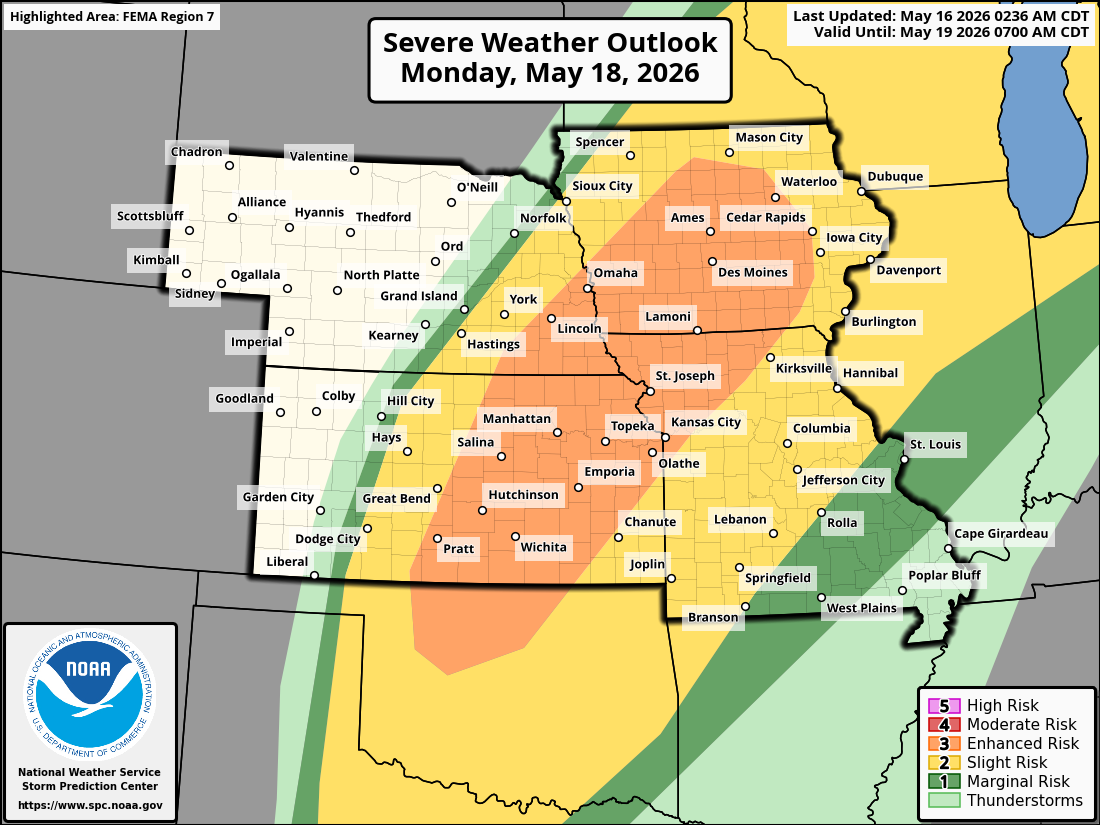
The Central Plains will be under the gun for multiple rounds of severe weather over the next few days. Images provided by the Storm Prediction Center.
By Monday, as the system moves into the Great Lakes and drags a strong cold front behind it across the Plains states, a very active day is expected from northern Texas northeastward to Michigan. Widespread strong to severe thunderstorms are likely, but the area from northern Oklahoma to Iowa is where the strongest storms are expected, with many supercells producing large hail, damaging winds, and numerous tornadoes. As the front moves eastward the threat for severe weather on Tuesday will shift to parts of the Great Lakes and Ohio Valley, as well as the southern Plains, and then potentially to parts of the East Coast and Tennessee Valley on Wednesday.
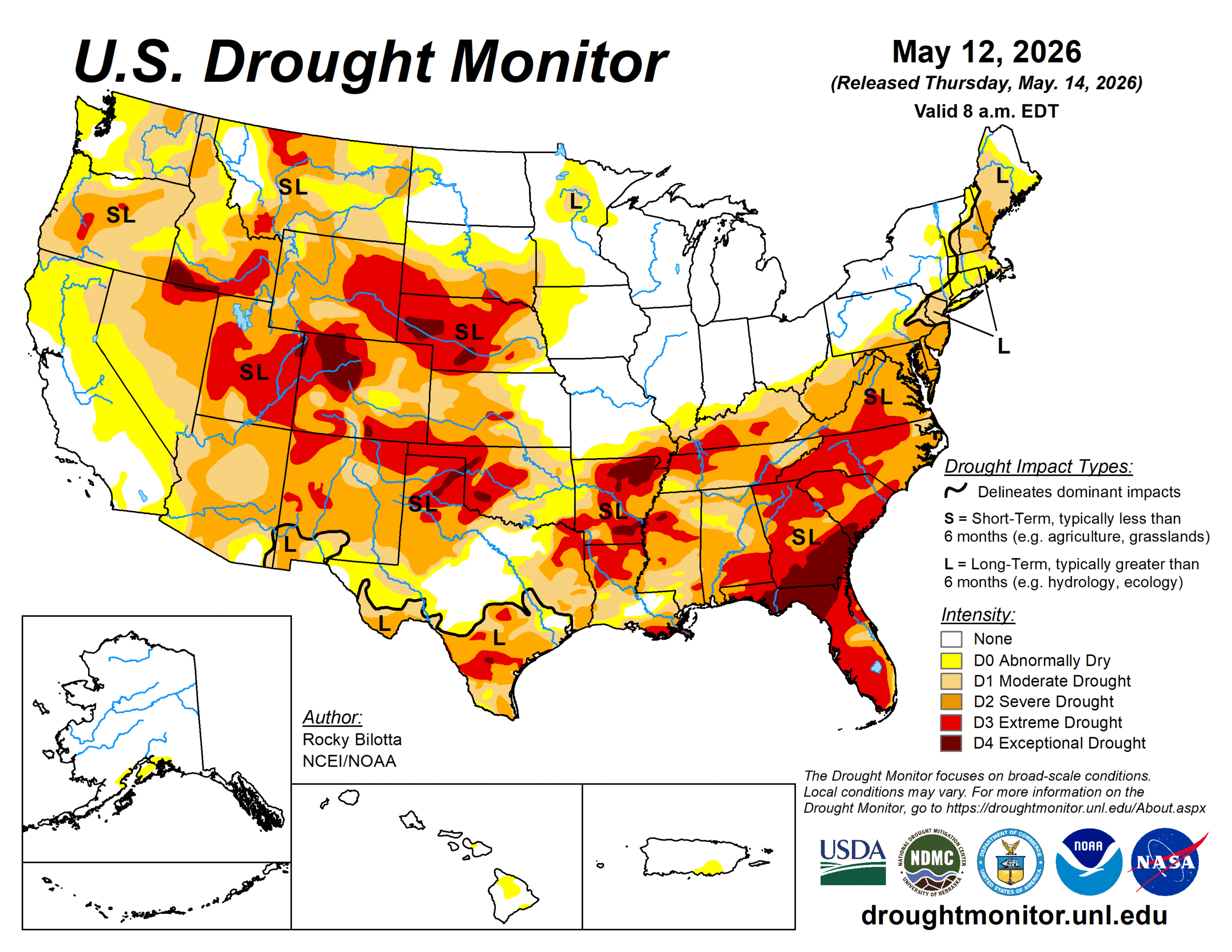
Drought conditions continue across a large portion of the nation. Image provided by the National Drought Mitigation Center.
There is a bit of a silver lining to this, as widespread rainfall, some of it heavy, is likely across a large portion of the nation’s mid-section. Much of this region, especially the Central and Southern Plains, is in the middle of a significant drought, so any rain is beneficial, and will help put a dent in the drought, especially as the growing season gets underway.
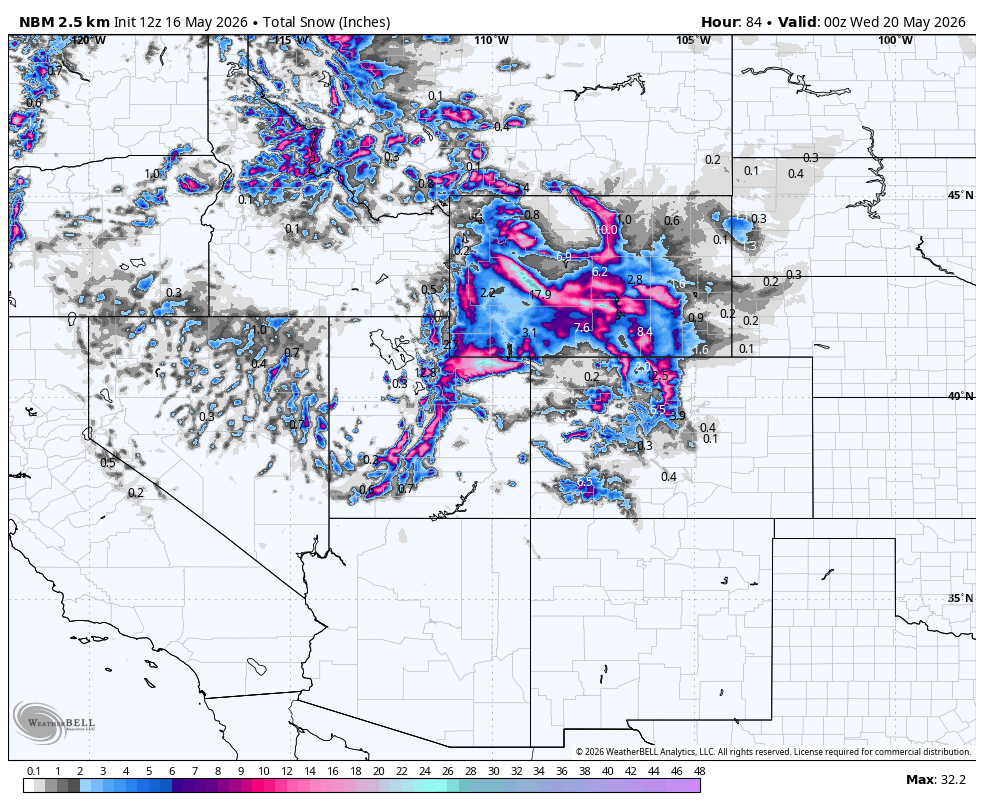
Another late-season snowstorm is possible across parts of the Intermountain West and the Rockies late this weekend and early next week. Image provided by WeatherBell.
Behind the cold front, much colder air will settle into the Plains states and the Rockies. Some record lows are possible both Monday and Tuesday morning as temperatures drop into the 20s and 30s. At the same time, another low pressure system will be moving across the Great Basin, and as it encounters the colder airmass, snow is expected across the mountains, with much-needed rain at the lower elevations. Winter Storm Watches have already been issued for parts of Wyoming for late Sunday and Monday, and more are likely to be issued for parts of the region, including Utah and Colorado, later today. Some of the mountains could pick up as much as 1-2 feet of snow, possibly even more in spots. Some flakes could mix in with the rain in the Denver area Monday and Monday night, with accumulations likely in the foothills west of the city. After a fairly dry winter, the snow is welcome, as it will help with spring runoff.