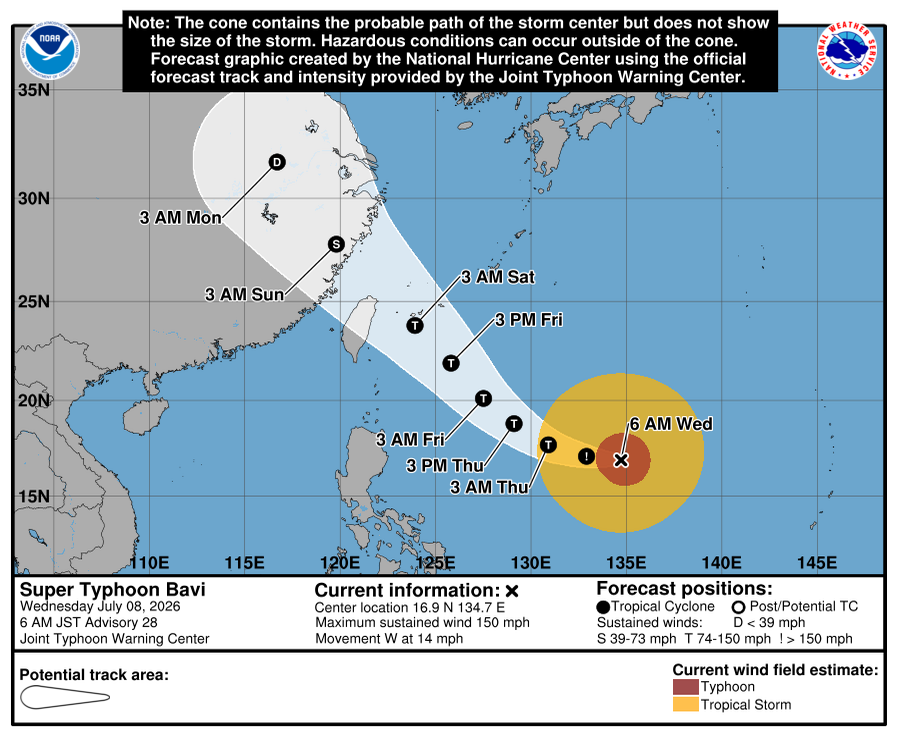
While the United States was celebrating its 250th birthday on the 4th, the Northern Mariana Islands were ravaged by Super Typhoon Bavi, which crossed the tiny island of Rota with the strength of a Category 5 hurricane on July 5th.
While storms of this strength might be devastating for the United States and parts of the Caribbean, areas in the Western Pacific, including the Northern Mariana Islands, and countries such as Japan, Taiwan, and China have had the time to build up infrastructure and procedures to mitigate the impacts of these storms.
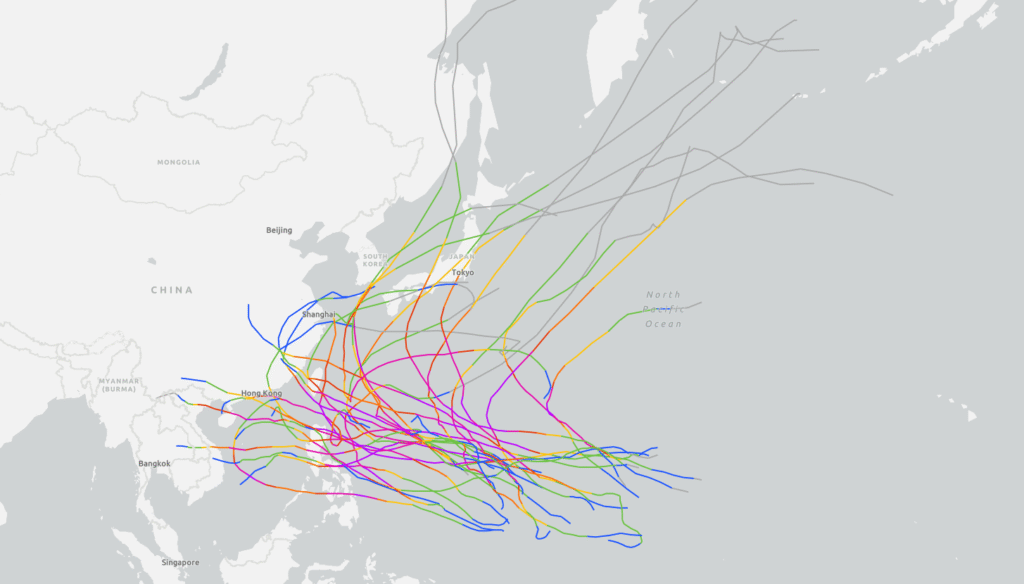
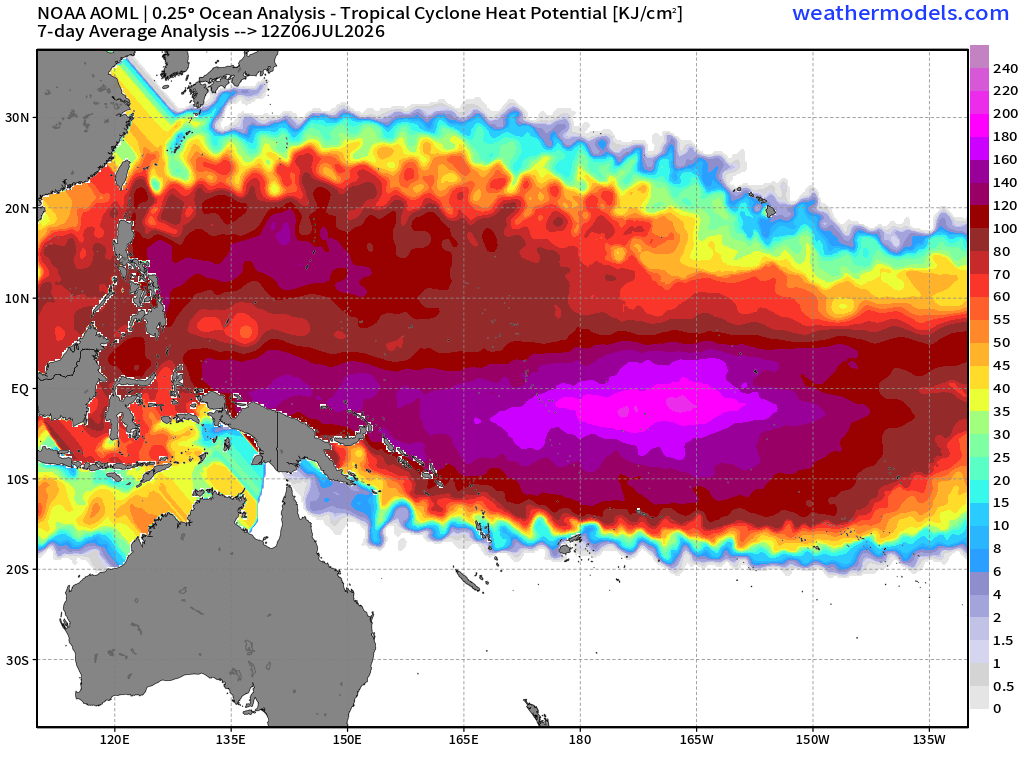
By far the biggest difference in the Western Pacific tropical season and the Atlantic tropical season is the length of the season. While the Atlantic season officially runs from June 1st to November 30th, the Western Pacific “season” runs all year, however the frequency of storms in the summer is larger compared to the winter. With a stronger El Nino, such as this year, the region for storm formation extends much further east than it does normally. Any storms that form in this extended region are likely to become Category 4 or 5 equivalent if other conditions are favorable, as they will have even more time over very warm water.
This is also not the first Super Typhoon to have affected the Northern Marianna Islands this year. Super Typhoon Sinlaku impacted the Mariana Islands in April 2026, passing directly over Saipan, and while it did bring significant damage to the region, the most significant effect of Sinlaku was the damage to the power grid, and to buildings such as sheds or other outbuildings, as well as minor damage to the roofs of some commercial buildings. Despite the collapse of the power grid in the Northern Mariana Islands, power was restored to a majority of the island in just 3 days.
The island of Rota was directly hit by the eye of Bavi, causing widespread damage to the island. The National Weather Service expects all trees and powerlines to be snapped, causing the island to be potentially uninhabitable for weeks as recovery efforts get underway. The airport on the island was approved for emergency use, improving recovery efforts through the island. Super Typhoon Bavi remains as Category 4 equivalent storm into the Philippine sea, and is expected to impact Taiwan by early Saturday and eastern China early on Sunday local time.