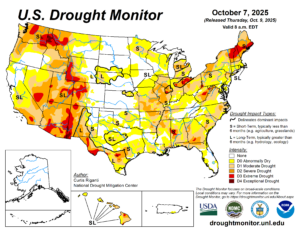
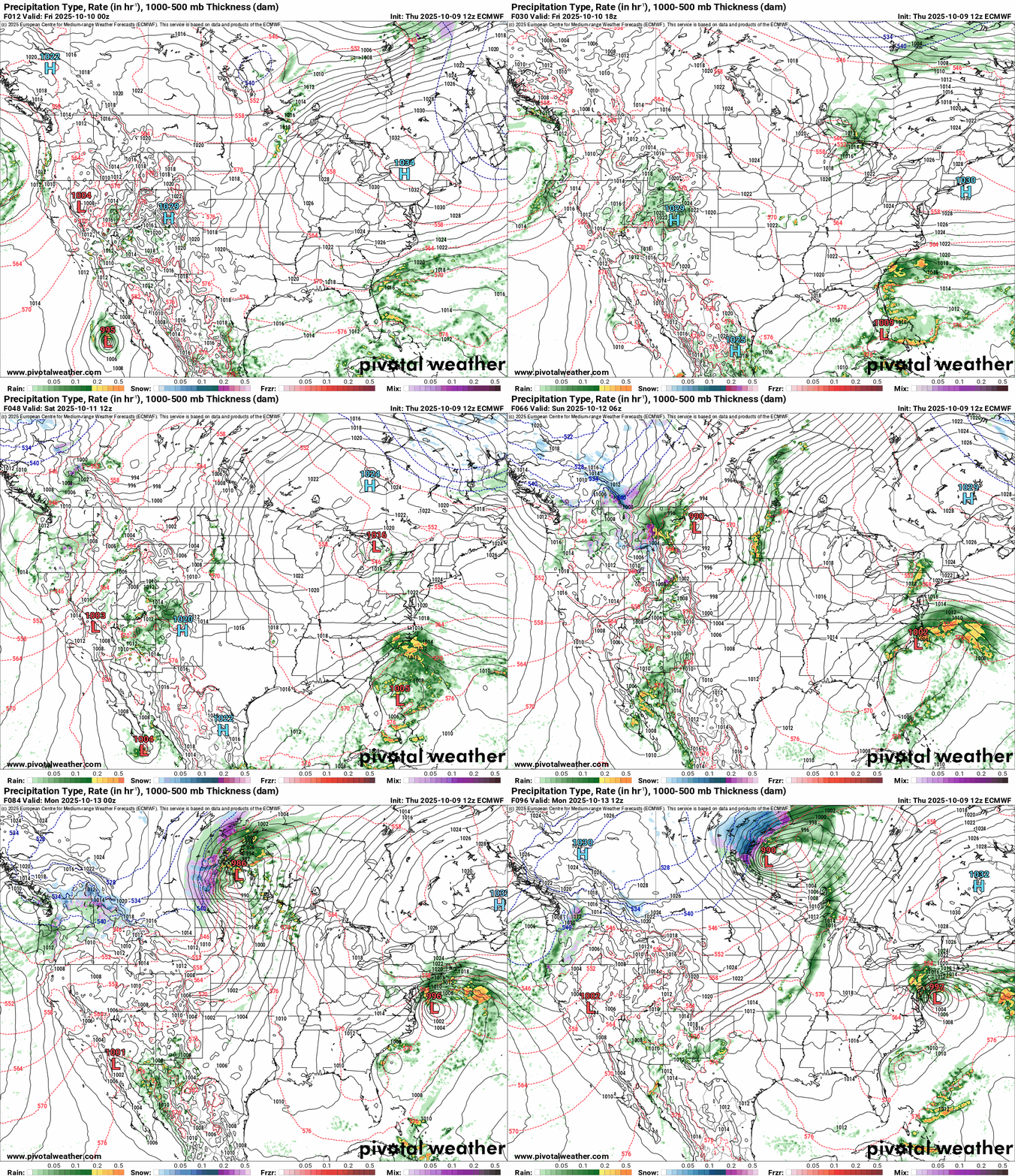
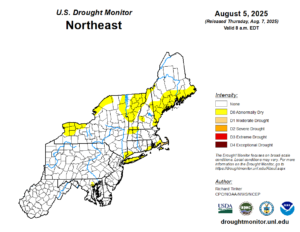
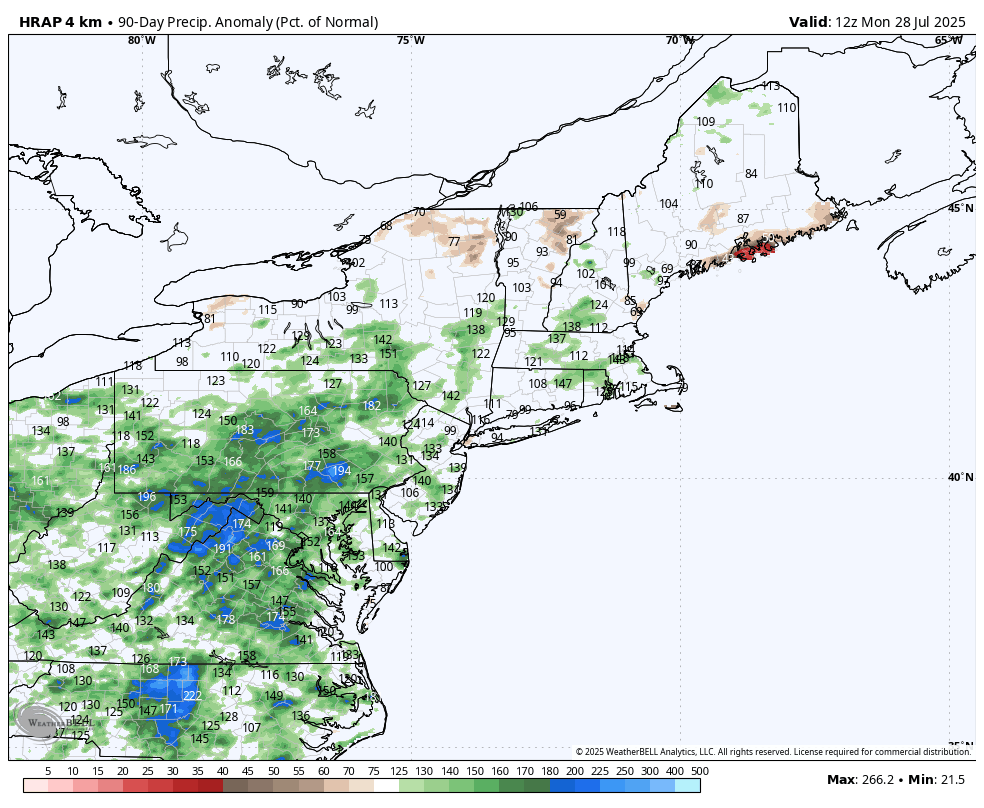
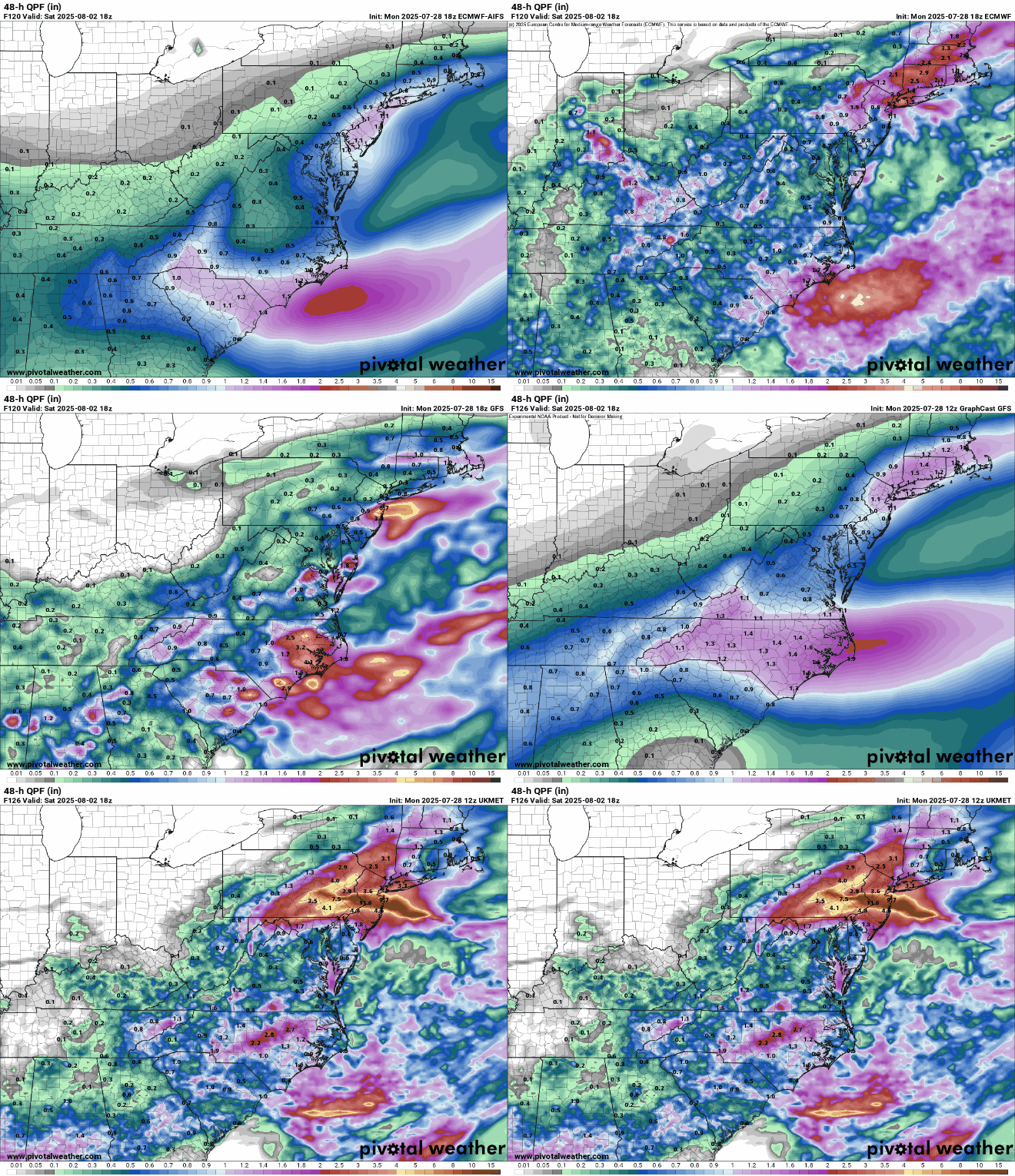
After several weeks of mainly dry weather from the Mid-Atlantic to the Northeast, many areas are experiencing abnormally dry to drought conditions, with some areas even seeing an extreme drought. A developing low-pressure system could bring some relief to areas.

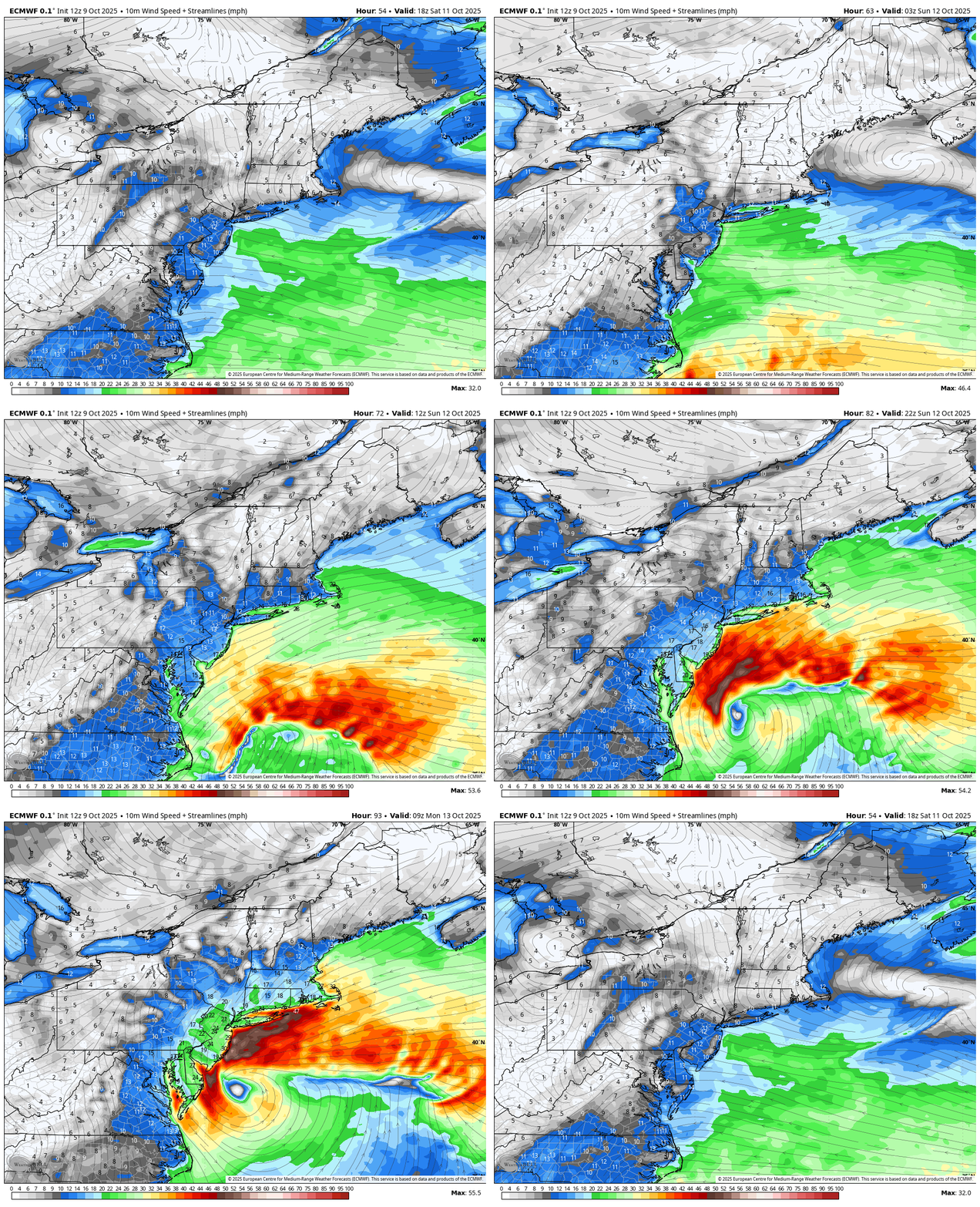
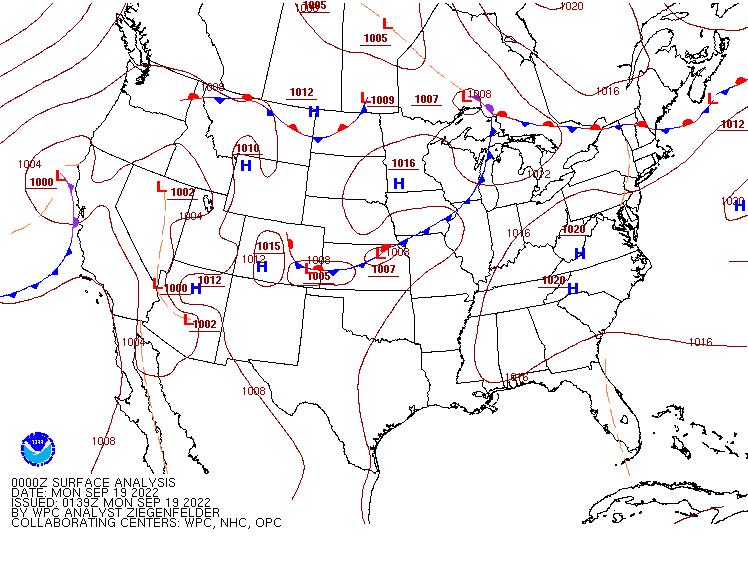
A system is developing off the coast of the Southeastern United States and is beginning to move north. At the same time, another smaller system is moving out of southern Canada and through the Great Lakes. By the end of the weekend, these two systems will combine near the Mid-Atlantic and progress toward New England.

As this system strengthens, it will bring the potential for strong and gusty winds from the Delmarva Peninsula to the southern coast of New England through the beginning of the week. This region still has most of its leaves on the trees, so these gusty winds could bring down the heavy trees, resulting in more widespread power outages.

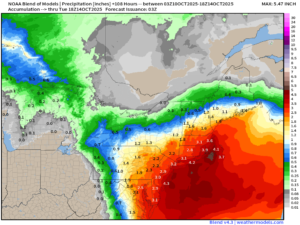
This system is also expected to bring heavy rain across the region. While much of the region is experiencing a drought and desperately needs rain, some areas, especially those closer to the coast, are at a higher risk of flooding. The greatest potential for flooding will be between Sunday afternoon and Monday night, with coastal flood watches and advisories already in effect spanning southern New England and the Mid-Atlantic. In combination with the highest rainfall totals near the coast, tides are still running higher than usual from the astronomical high tides that occurred earlier this week. Strong winds will also contribute to the formation of large waves offshore, creating a long fetch. The persistent east and northeast flow will allow these large waves in the long fetch area to move onshore, posing a greater threat to flooding in coastal areas, especially from Cape Cod to the northern Mid-Atlantic through Monday evening.

Impacts will begin to diminish Monday night as the system starts to pull away from the region before high pressure builds in behind over the Northeast and Mid-Atlantic, allowing for drier weather through at least the middle of the week.
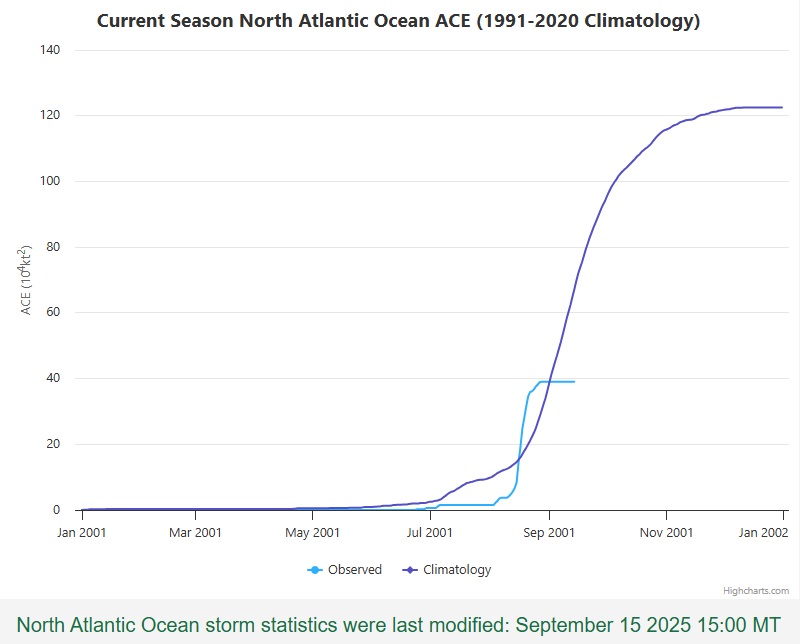
September is normally the peak of hurricane season, but that hasn’t been that case this year, things have been quiet for a while now, though that could be changing.

The last time there was an active system in the Atlantic was on August 29, when Tropical Storm Fernand became extratropical more than 600 miles east-southeast of Newfoundland, in the open waters of the North Atlantic. Climatologically, the peak of the season is September 10 – the day you are most likely to observe a tropical cyclone somewhere in the Atlantic, Caribbean, or the Gulf. Instead, we’re at 18 days and counting without a system. How unusual is that? The last time there were no active systems in the Atlantic between August 29 and September 15 was in 1939, right at the start of World War II. However, that quiet period may be coming to an end over the next few days.

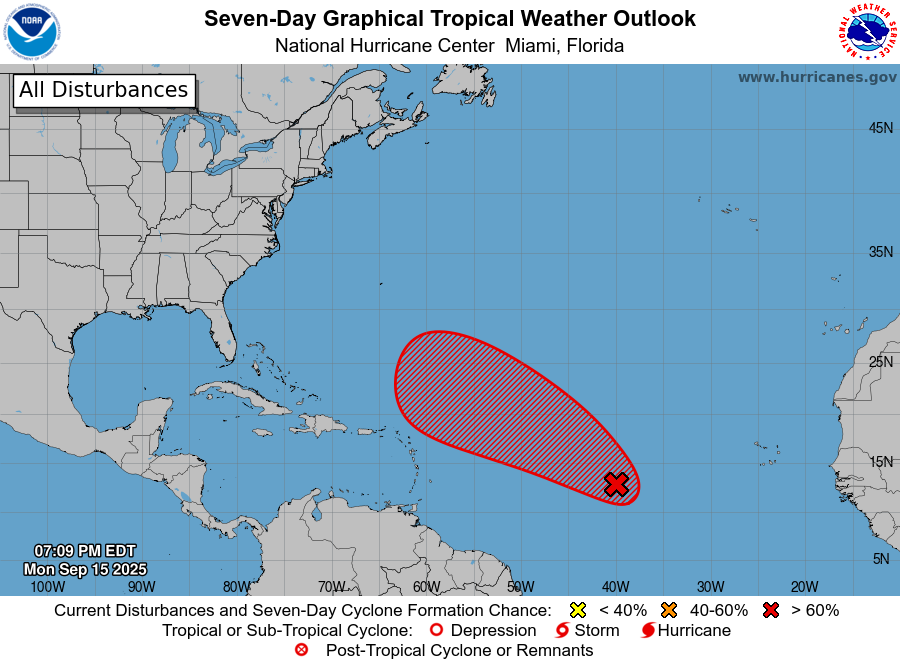
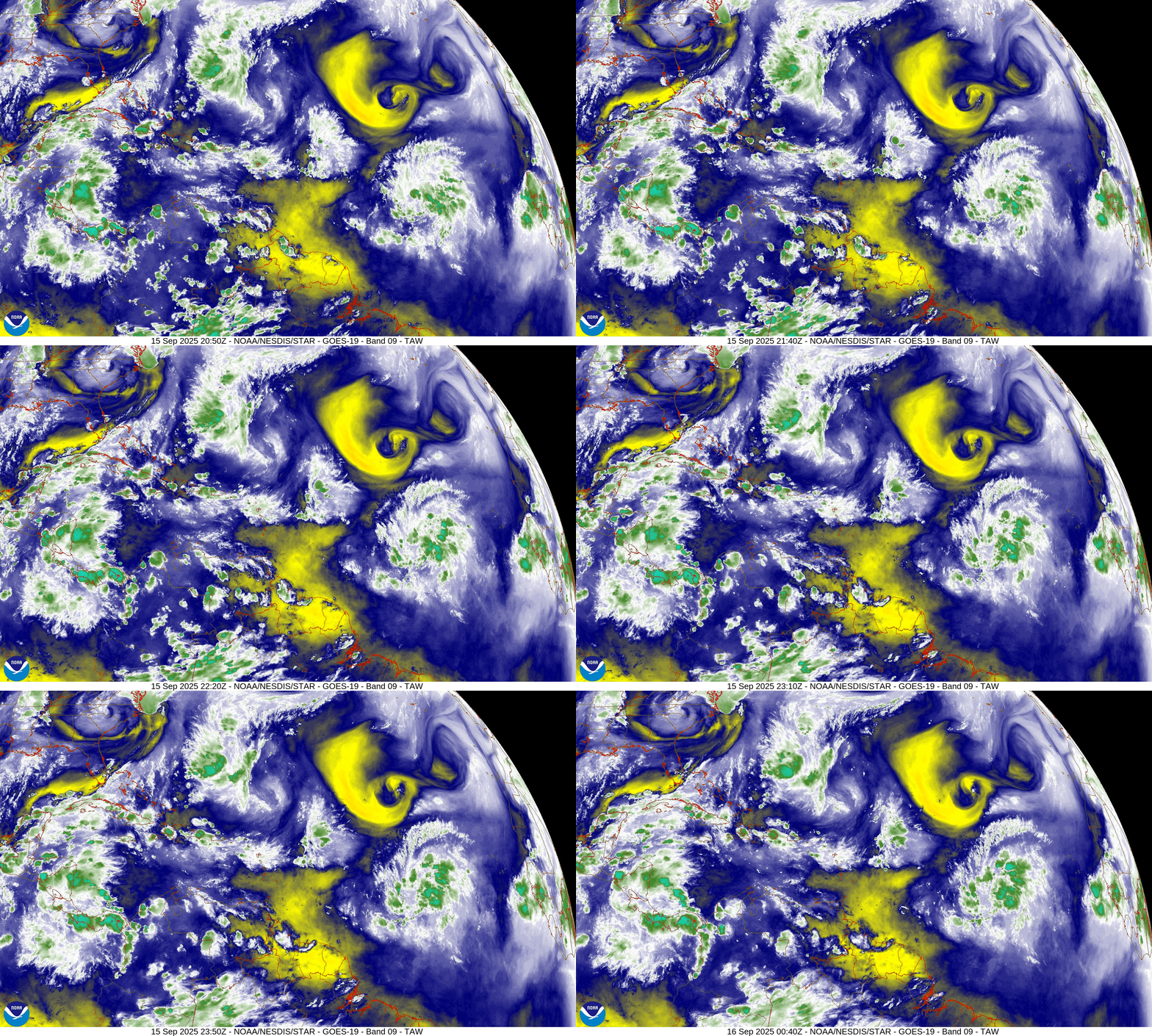
A tropical wave that is making its way across the Atlantic’s Main Development Region is slowly getting its act together. Shower and thunderstorm activity is disorganized at this time, and upper-level conditions are not that favorable right now, but as the system continues west to west-northwestward over the next few days, some additional development is likely. There is some dry air ahead of the system, but as it starts to gain latitude, it should encounter a more moist environment. Additionally, there is an upper-level low pressure area to the north of the system, but as it heads westward, it should pull away from that, encountering more favorable conditions for development. Sea Surface Temperatures are already warm enough, so that shouldn’t be an inhibiting factor.

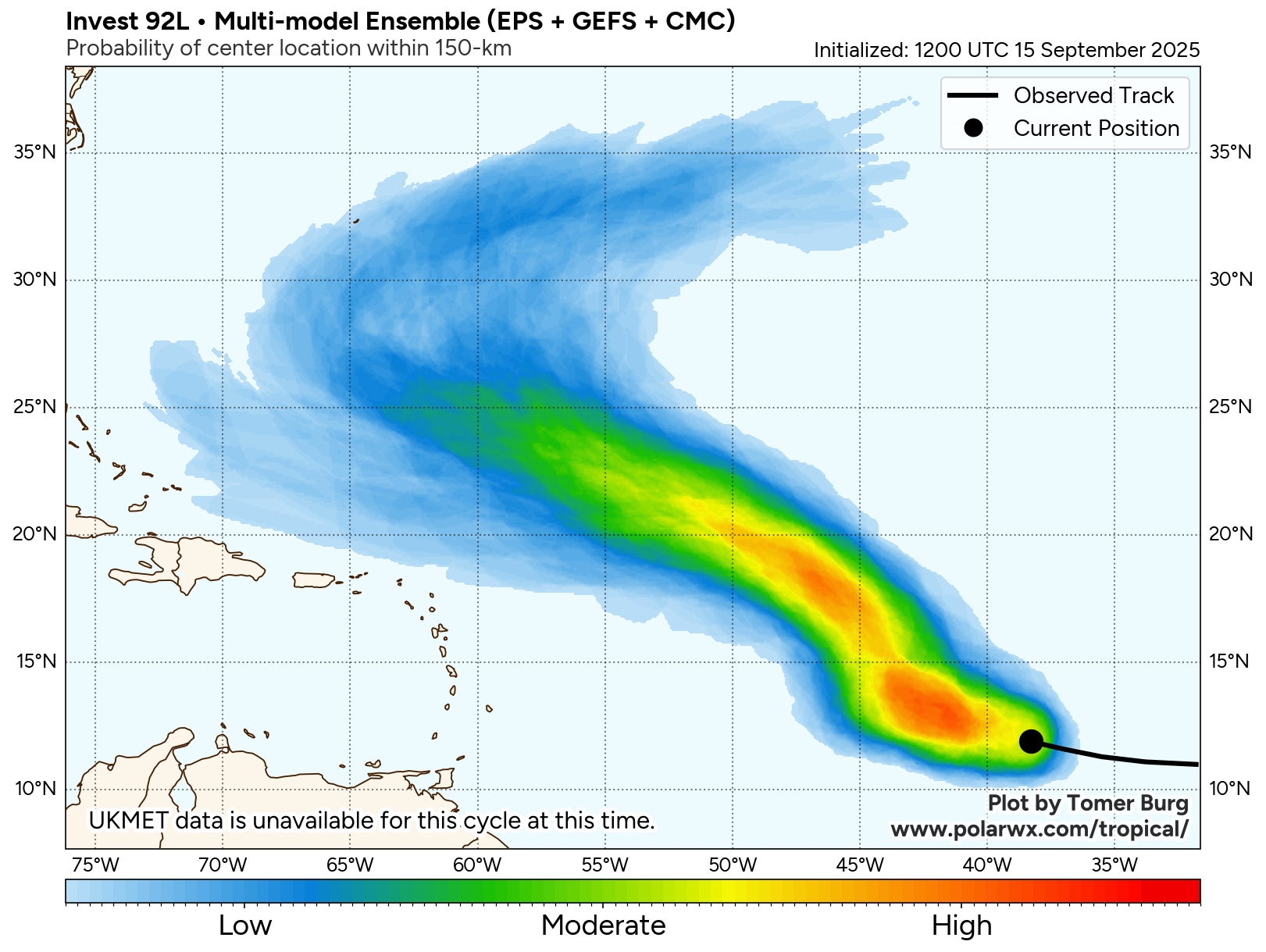
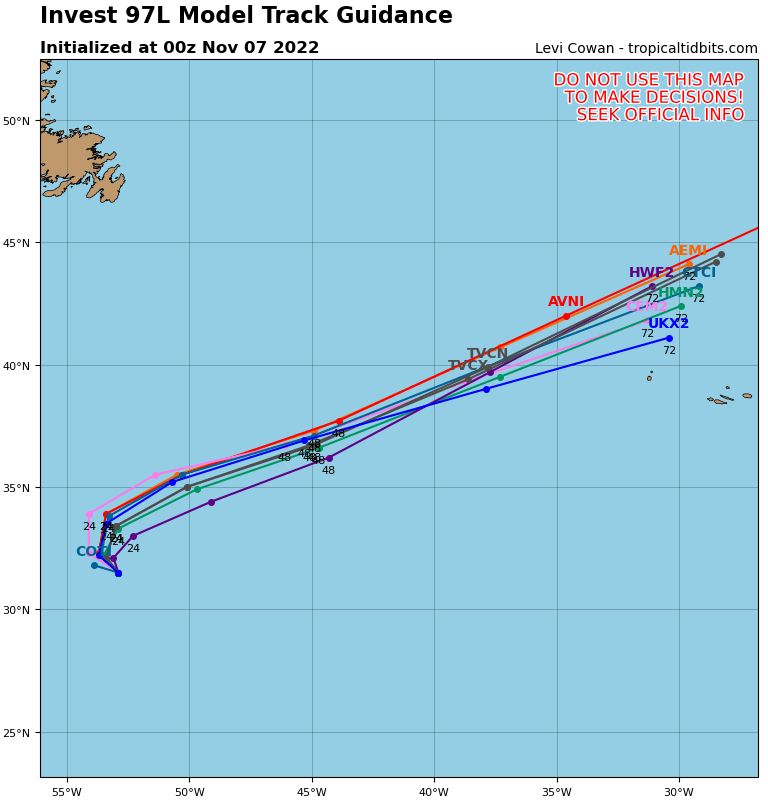
Most of the forecast models are showing the potential for the system to organize into a tropical depression during the middle to latter portion of the week as it continues to head west-northwestward. Additional strengthening is expected, and the system could become Tropical Storm Gabrielle by this coming weekend. As for where it should go, with a ridge of high pressure over the central Atlantic, it should continue west-northwestward through much of the week. By the weekend, it could reach the western edge of that ridge and turn more toward the north and the eventually northeast and out to sea. Where it makes that turn will determine whether the system will eventually be a threat to Bermuda, but otherwise, it does not look like this system will be a threat to any other land areas over the next 5-7 days.

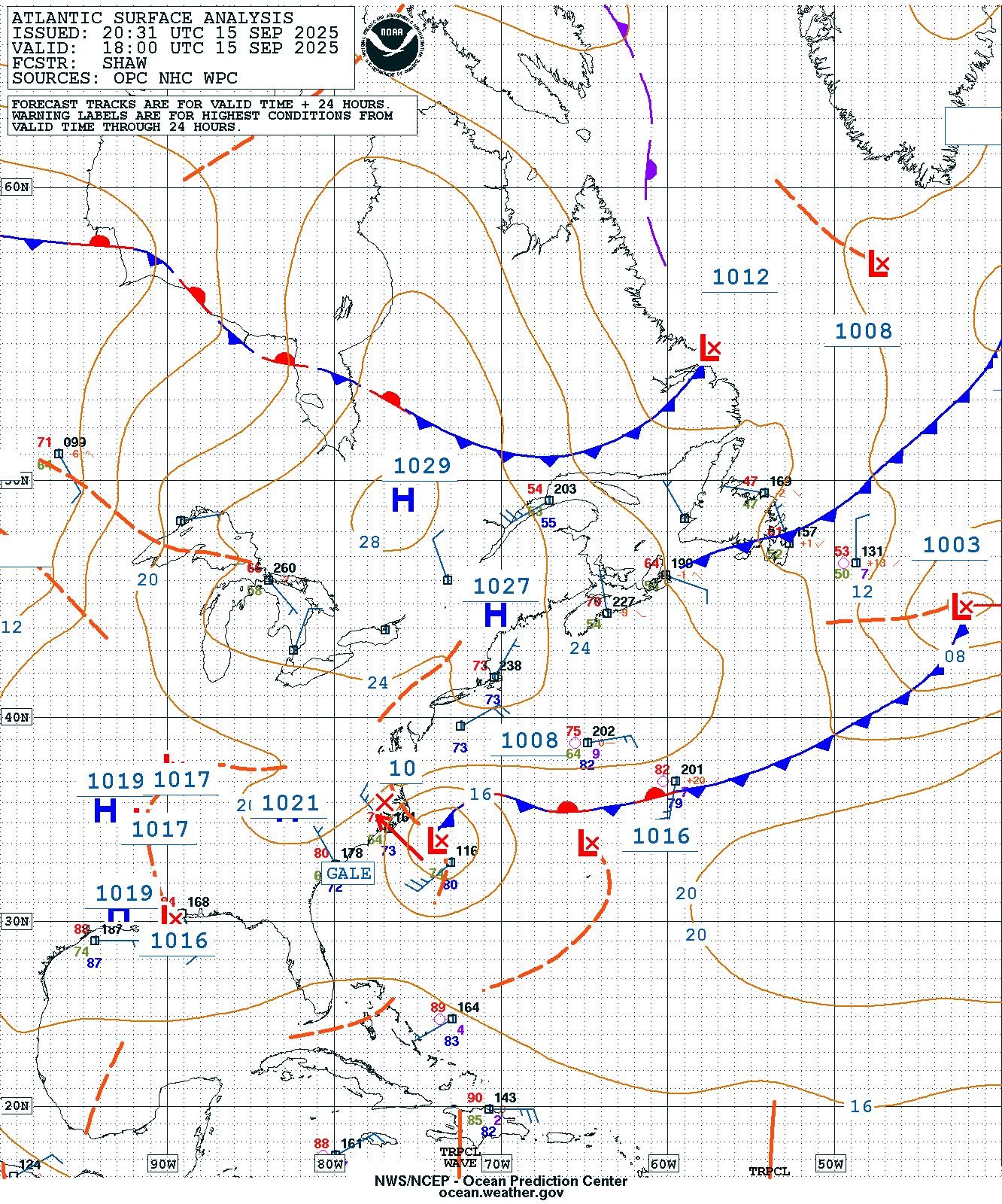
Closer to the United States, there’s another system we’re keeping an eye on, though it isn’t tropical at this time. Low pressure has developed along an old frontal boundary off the North Carolina coastline. Meanwhile, there’s an upper-level low pressure area over central North Carolina. That upper-level low will pull the surface storm towards the coast of eastern North Carolina and the Virginia Tidewater into Tuesday. This will result in some heavy rain along with embedded thunderstorms across the region over the next day or two. Locations from Richmond to Raleigh and points eastward could receive 2-4 inches of rain by Wednesday morning, with isolated totals in excess of 5 inches possible.

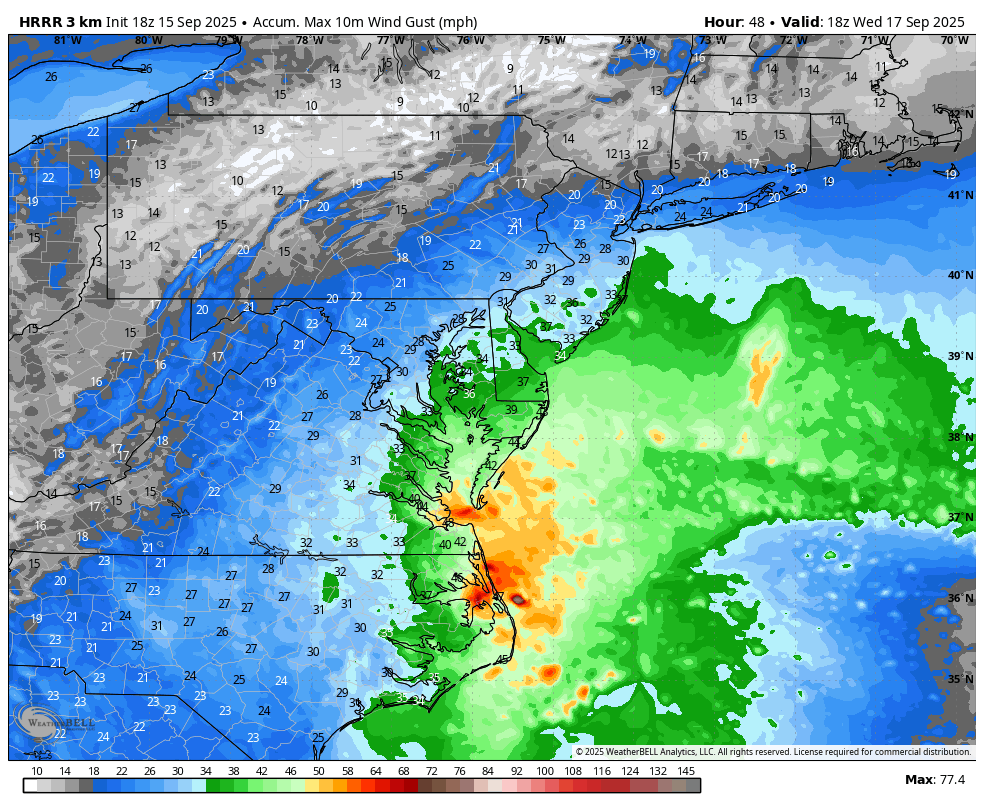
With a large area of high pressure to the north, the system won’t move that much for the next 24 hours, but should start to pull away and head out to sea by Wednesday and Thursday. The gradient between the high to the north and the low pressure area will result in some rather gusty winds, especially near the coast. Wind gusts of 35-45 mph and perhaps stronger are expected for coastal areas from Southern New Jersey to the North Carolina Outer Banks through Wednesday. In addition to the hazardous marine conditions, this will create a high risk for dangerous rip currents at beaches in this stretch. That high pressure area will also block any northward progress the storm will try to make, preventing much-needed significant rainfall from reaching portions of New England and southeastern New York, where a significant drought has been worsening over the past few months.

Many families across the United States will be trying to squeeze in one last summer activity this weekend, as Labor Day marks the unofficial end of the summer season. Fortunately, many areas will experience sunshine and dry weather as high pressure dominates the majority of the pattern across the country, while others may not be so lucky.
A large stalled front will bring rain to much of the Gulf Coast and Southern Plains through the weekend, with heavy rainfall expected. Flash flooding will be a concern for eastern New Mexico, central and western Texas, and the Central Plains on Saturday, while west and central Texas, as well as southern New Mexico, remain at risk for flooding through Sunday. Showers could also spread into the Tennessee Valley on Monday as the front remains stationary.
The front will also extend into the Rocky Mountains, bringing showers and thunderstorms to start the weekend. A warm front will break off and progress east on Sunday with a low pressure system moving across the northern part of the country. Areas in extreme eastern Nebraska could be at risk for flash flooding as this system begins progressing east. Temperatures will average well below normal ahead of this system and return to near normal on the backside.
A cold front in association with a low pressure system slowly moving into Atlantic Canada will extend into the Mid-Atlantic and Tennessee Valley on Saturday, allowing for some extra cloudiness across the region. This system will also send disturbances through the Northeast, bringing an increase in clouds during each afternoon, especially on Saturday. Areas in extreme northern New England may also see a stray shower or two, particularly in the afternoon as the disturbance moves through.
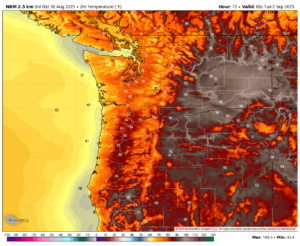
Areas along the West Coast will experience dry weather through the weekend, with temperatures averaging near normal to start the weekend, then shifting above normal toward the end of the weekend, with extreme heat possible, especially in interior areas.

Looking at the week ahead, things are expected to remain relatively quiet. Areas across the Central U.S. will continue to see well below normal temperatures ahead of a slow moving warm front. Areas in the west, specifically in the Pacific Northwest, will continue to see above average temperatures, where hot temperatures are expected to continue through the remainder of the week. There are no active storms in either the Atlantic or the Pacific; however, some areas are being monitored for potential development as the week progresses.

August typically brings a range of weather conditions to the United States, from excessive heat to tropical systems and everything in between. As we move into the middle of the month, we are beginning to see this play out.
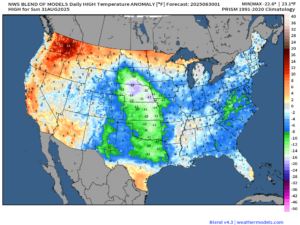
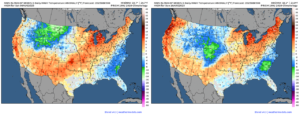
This weekend will bring dry and warm weather to much of the country. Many areas are expected to experience above-normal temperatures on Saturday. In contrast, others, including the Mid-Atlantic, Southeast, Intermountain West, and North-Central Rockies, are expected to experience below-normal temperatures. A cold front moving into the center of the country on Saturday will allow temperatures to dip below normal across the Central Plains on Sunday. Temperatures will also shift above normal on Sunday in interior areas of the Pacific Northwest as high pressure builds in across the region.

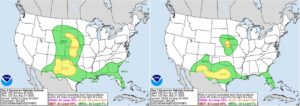
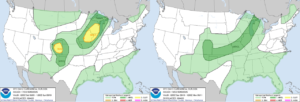
A cold front moving across the central United States will bring a marginal risk of severe weather to the Upper Great Lakes and Central Mississippi Valley, as well as the Central and Southern Plains, through the weekend. The highest risk for severe storms will be on Saturday, with a slight risk of severe weather across southwestern Wisconsin, southeastern Minnesota, northeastern Iowa, and eastern Colorado.

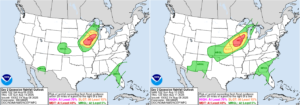
The cold front will also bring heavy rainfall to the Upper Midwest. There is a moderate risk of excessive rainfall across southwest Wisconsin, eastern Iowa, northwestern Illinois, and northeast Missouri on both Saturday and Sunday, with a slight risk extending from southern Wisconsin to eastern Kansas. A stationary front will continue to produce rain and thunderstorms across much of the Southeastern United States, with a marginal risk of excessive rainfall on both days. Meanwhile, in the Southwest, monsoonal moisture will bring showers and thunderstorms to the region with a marginal risk of excessive rainfall for both Saturday and Sunday.

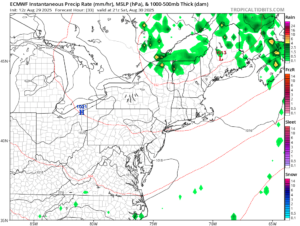
As we move into the beginning of next week, temperatures are expected to rise across the Northeast, with above-normal values anticipated for much of the week. The slow-moving front will bring showers and thunderstorms to the Midwest through the middle of the week before moving into the Northeast toward the second half of the week. The Northeast will see its next potential for rain as this front moves through, ending its dry stretch, which has caused some areas to become abnormally dry across the region.

The stationary front across the south will continue to bring the potential for rain and thunderstorms to much of the region through the end of the week. Areas in the Southwest will also see the possibility of showers and thunderstorms each afternoon as monsoonal moisture remains over the region. Otherwise, high pressure will continue to bring dry weather to the majority of the country.
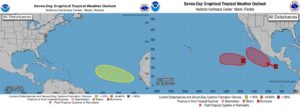
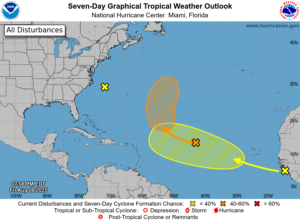
We will also be monitoring tropical development as the week progresses, since the National Hurricane Center continues to monitor areas in the Atlantic Ocean for possible development over the next seven days. Some models have been in favor of tropical development by the end of the week, but also show vastly different solutions for these systems. At this time, it is still too early to determine whether these storms will develop, never mind their storm tracks.

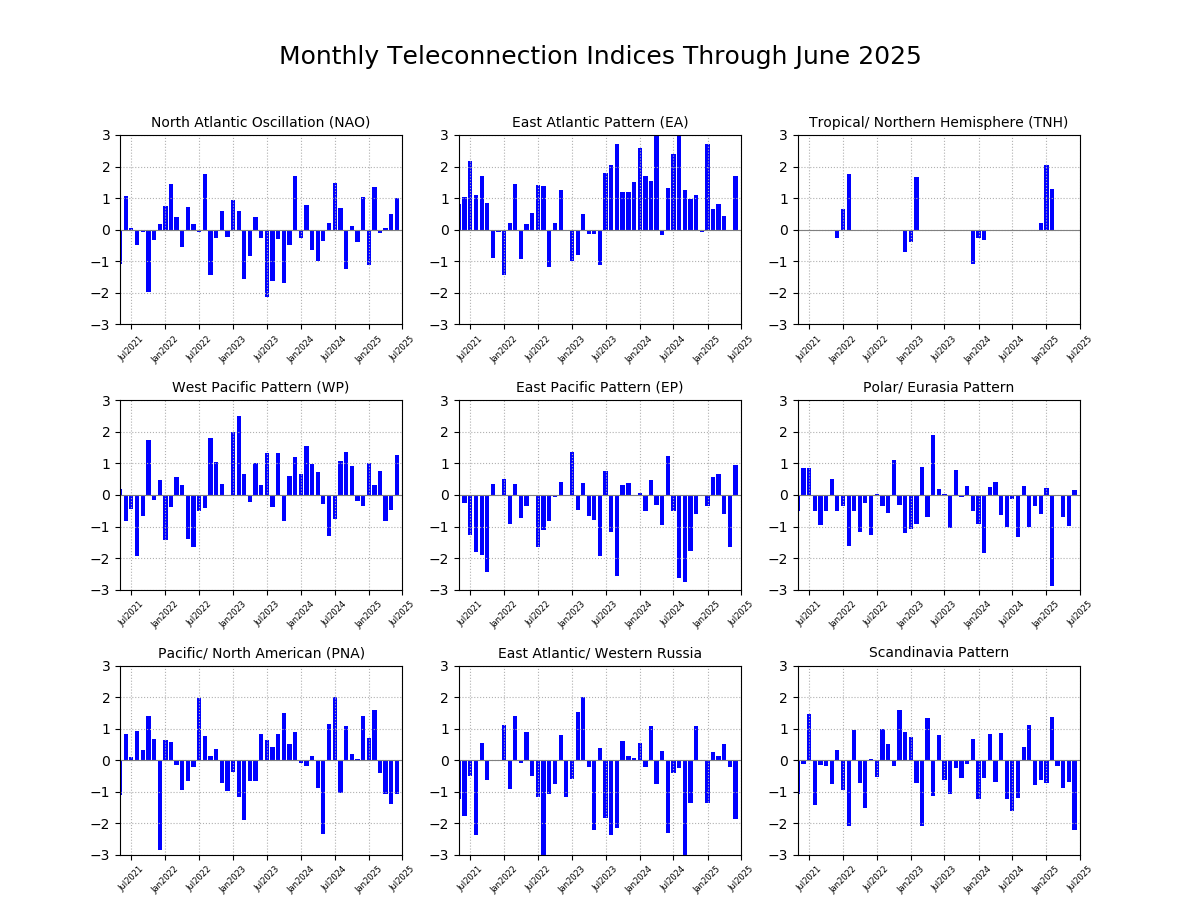
Over the past few months, there has been consistent troughing over the United States, particularly in the Great Lakes region, which has led to a stormier pattern across the eastern half of the country. One factor that can influence these changes in storm patterns and consistency is teleconnections.

Teleconnections are relationships between specific weather phenomena at locations often separated by considerable distances. These phenomena are correlated with particular climate patterns spanning thousands of miles and exhibit variabilities ranging from days to years. Some of these patterns can also have more significant impacts during specific seasons, while others affect the climate pattern throughout the year.

Some of the major teleconnections and patterns that affect North America include the Arctic Oscillation (AO), El Niño/Southern Oscillation (ENSO), East Pacific Pattern (EP), North Atlantic Oscillation (NAO) , Pacific/North American Pattern (PNA), and Madden-Julian Oscillation (MJO). Patterns like ENSO will have a lesser impact on intraseasonal climate variability, as it can take several months to transition between phases. In contrast, the NAO will have a greater impact, as it can change between phases on a more regular basis.

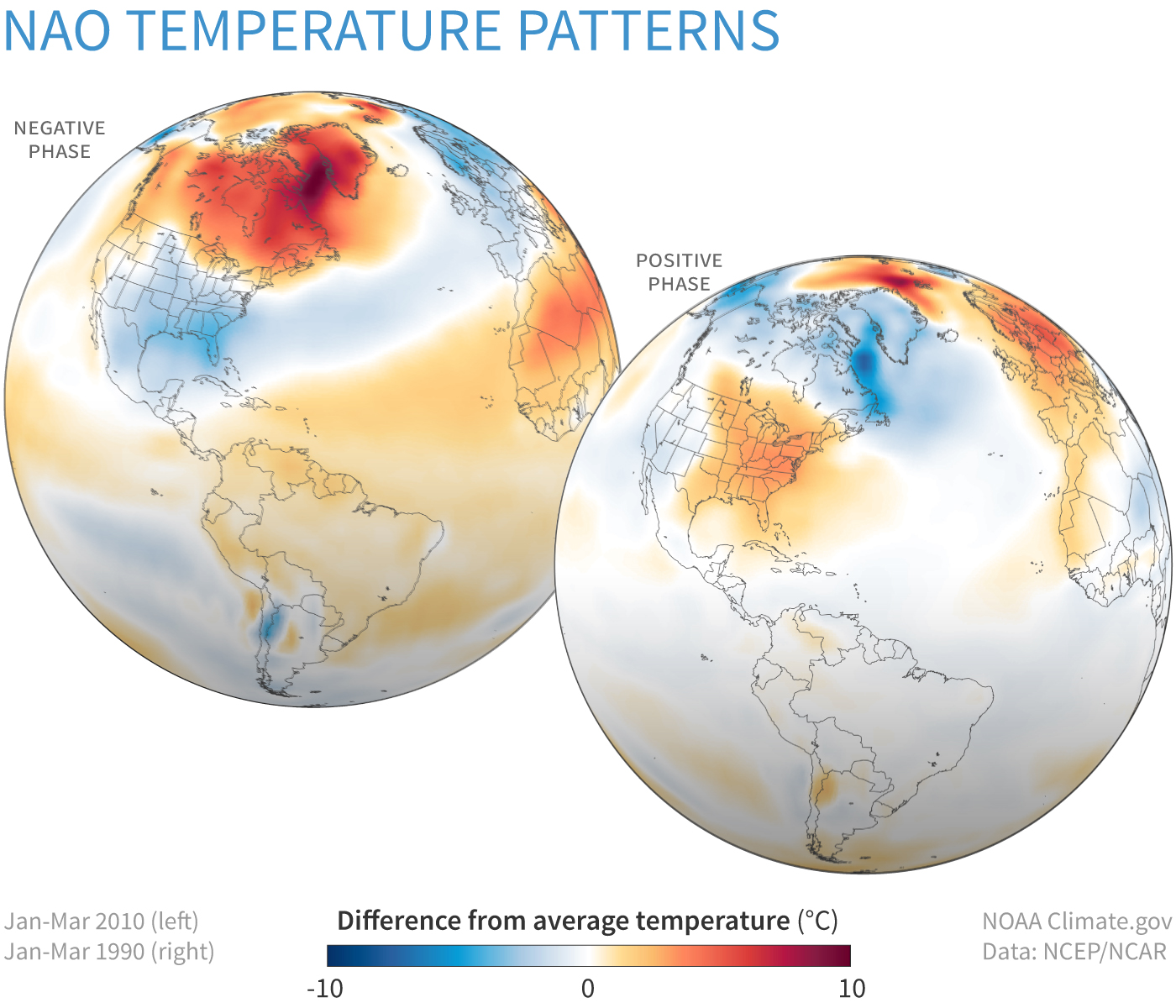
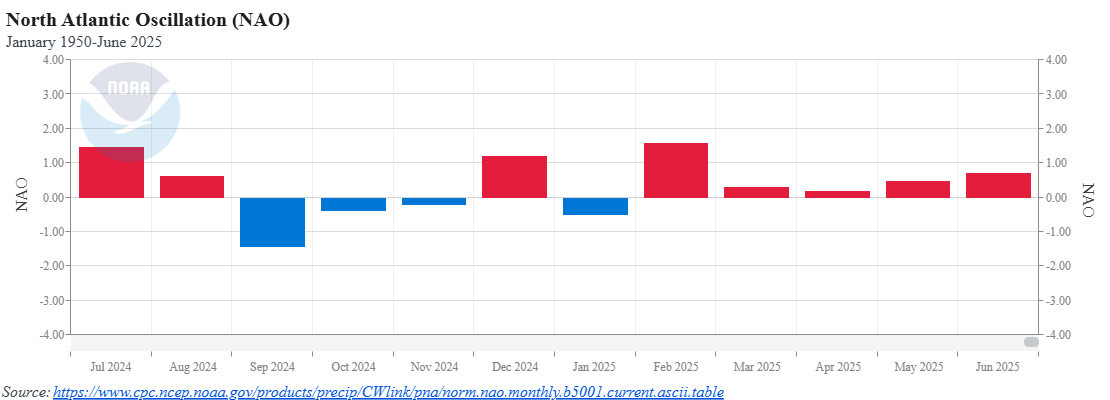
The NAO is an oscillation that impacts the climate pattern throughout the year. The positive phase will generally bring above-normal temperatures with a drier pattern to the Eastern United States, while the negative phase will produce the opposite. In the winter, a negative NAO usually leads to blocking over Greenland, and an increasing chance for more potent storms off the East Coast. The NAO has been mainly in the positive phase since early 2025. Although this may mean dry and warm conditions, the spring of 2025 averaged above normal for both temperature and precipitation across the eastern United States.

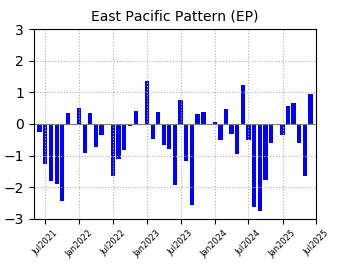
When examining other teleconnection patterns to identify the potential origins of the persistent unsettled pattern, it can be noted that the East Pacific Pattern transitioned into its positive phase in June, following a predominantly negative phase, especially over the past year. When the East Pacific Pattern is in its positive phase, the Eastern United States will experience more cyclonic activity, i.e., the persistent troughing we’ve been seeing across the Great Lakes and into the Eastern United States over the last several weeks.

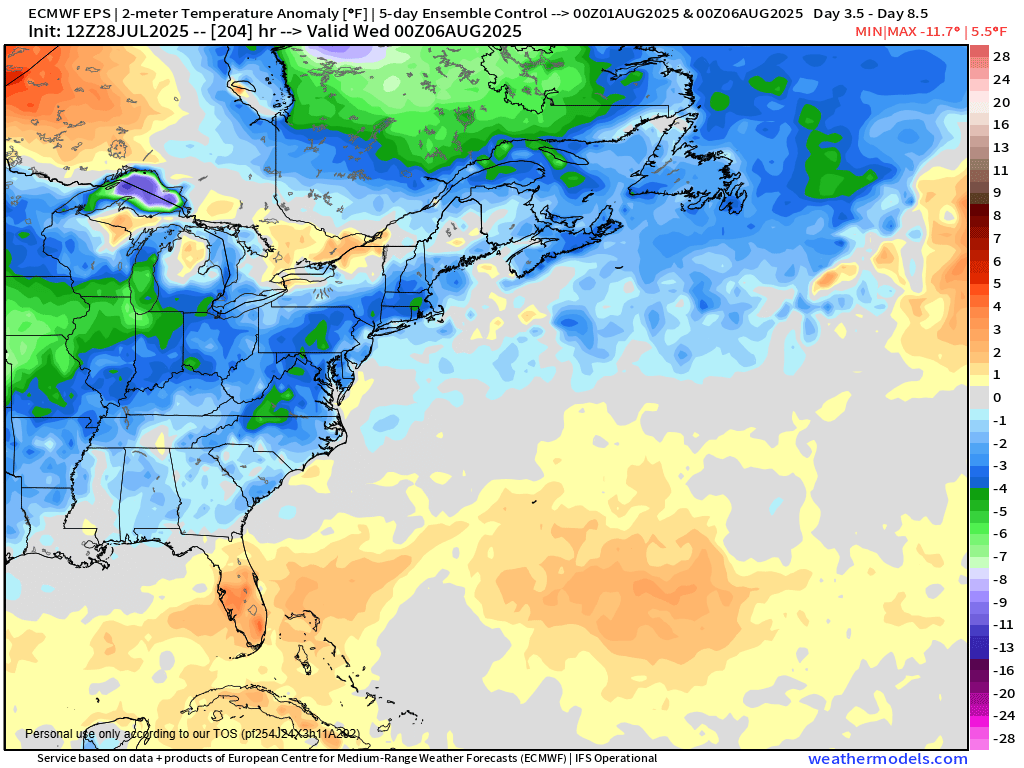
The stormy pattern is expected to continue across the East this weekend, as the NAO is expected to turn negative again, and a large trough of low pressure will settle into the Northeast. After a couple of hot and humid days for the first half of the week, a strong cold front will cross the region late Wednesday and Thursday before stalling out across the Mid-Atlantic states. Behind the front, temperatures will be as much as 5-10 degrees below normal for the end of the week and into the start of next week.

Along with the cooler weather, the potential exists for more heavy rain and flooding in parts of the Mid-Atlantic states and Northeast. As that front stalls out, a wave of low pressure will ride along it Thursday into Friday. With plenty of moisture in place in the tropical atmosphere south of the front, the wave of low pressure will produce heavy rain and thunderstorms. Some models show the potential for 3-6 inches or more of rainfall in spots in the span of 24-36 hours. Where the heaviest rain falls will be determined by where the front stalls out and the wave rides along it, which is still uncertain at this point.

This pattern has the potential to produce other issues as we head deeper into the summer. The tropics have been mostly quiet thus far, but we’re approaching the time of year when activity ramps up. The bulk of storms in the Atlantic form between mid-August and mid-October. While many storms will end up recurving and heading out to sea before impacting the United States, an East Coast threat becomes a little more likely with an upper-level trough of low pressure in the Midwest or near the Appalachians.
The Pacific continues to grab the headlines, but the Atlantic is getting active as we get closer to the peak of the season.
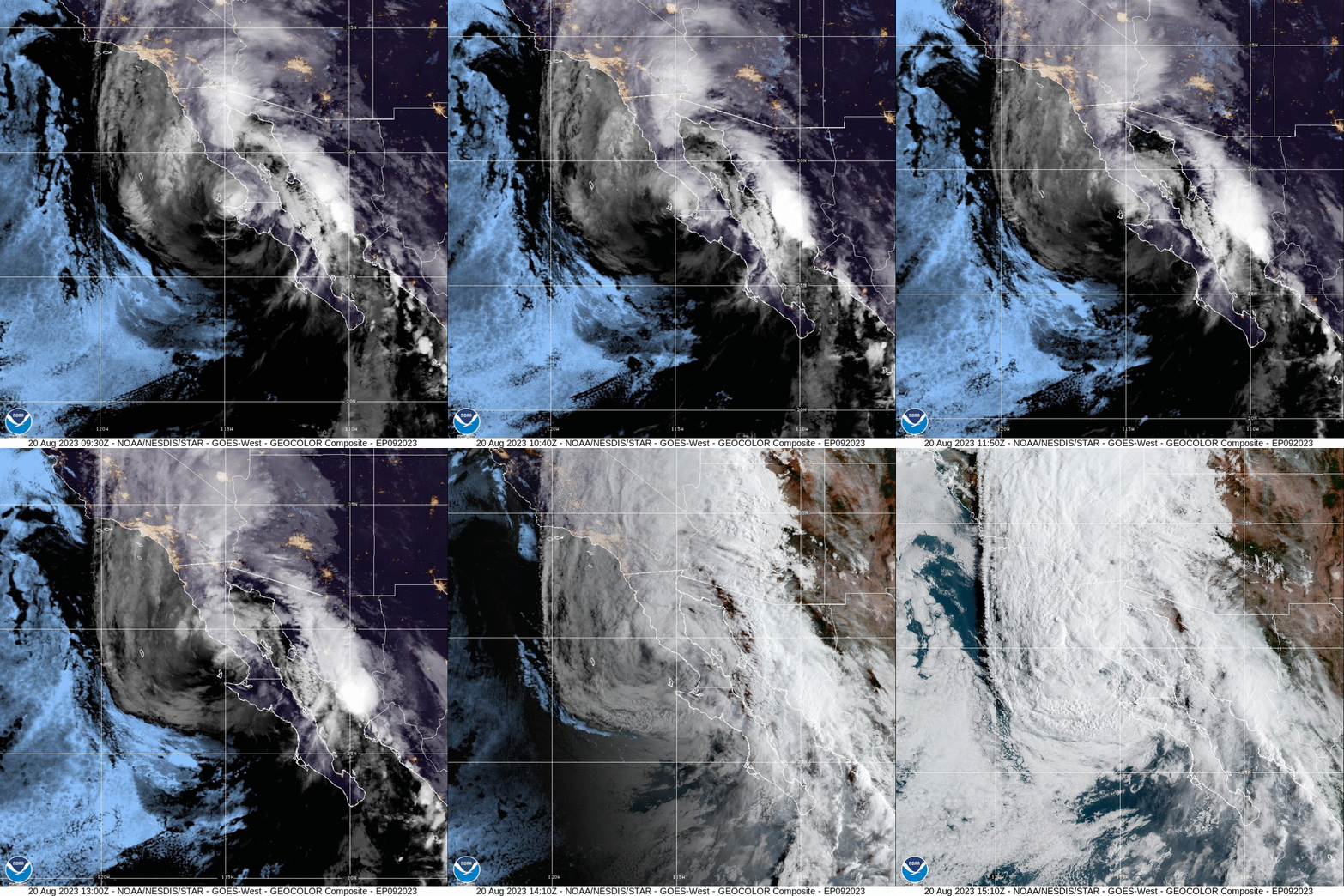
Hurricane Hilary has been downgraded to a Tropical Storm as it continues northward very close to the coast of the Baja California peninsula. As of 11am EDT, Hilary was centered about 220 miles south-southeast of San Diego, moving toward the north-northwest at 25 mph. Maximum sustained winds are near 70 mph. Tropical Storm Warnings remain in effect for northern portions of the Baja California peninsula, as well as the southern California coast from the Mexican border northward to Point Mugu, including Catalina Island.

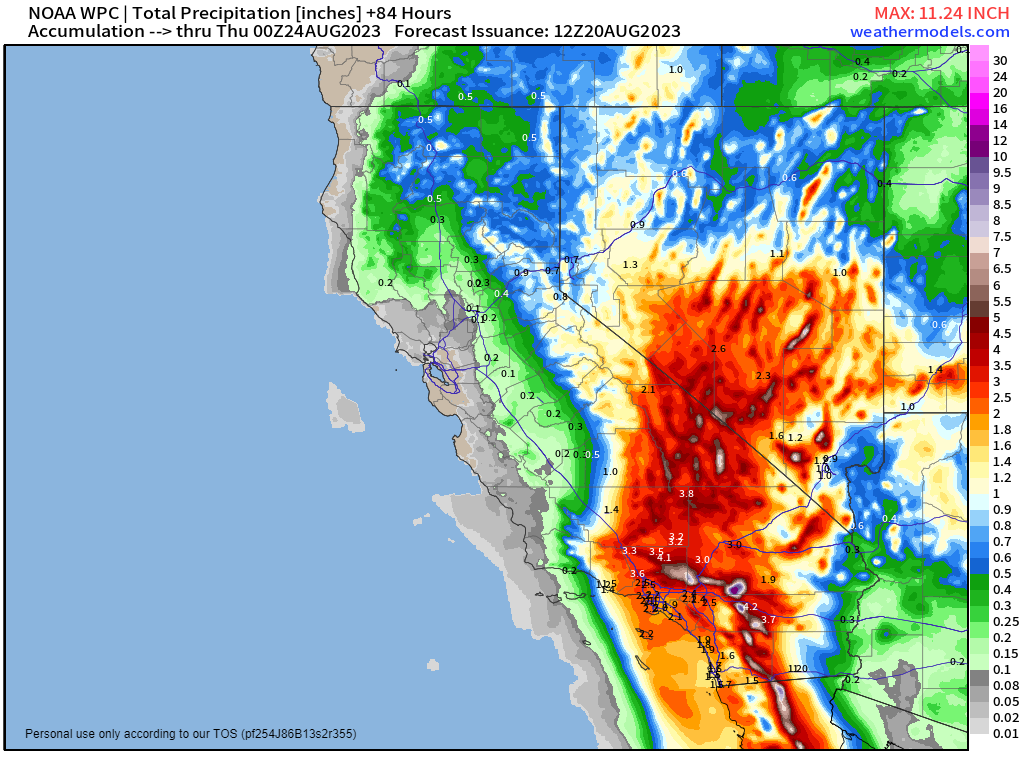
Hilary is expected to continue weakening today as it passes very close to the Baja coastline and into southern California. Hilary will produce gusty winds and storm surge along the coast, with a few tornadoes possible across parts of the Southwest, but heavy rain and the resultant flooding are the most significant threat with this storm. Rainfall totals of 3-6 inches are likely across many locations in southern California and Nevada, with some totals in excess of 10 inches possible. In some of the desert locations, including Death Valley, this is more rain than they normally receive in an entire year. Widespread flooding is likely, including the San Diego, Los Angeles, and Las Vegas metropolitan areas. As Hilary continues to push northward and weakens, heavy rain will spread across the Great Basin, and Inland Northwest, with rainfall totals of 1-3 inches possible, likely producing some flooding in these areas as well.

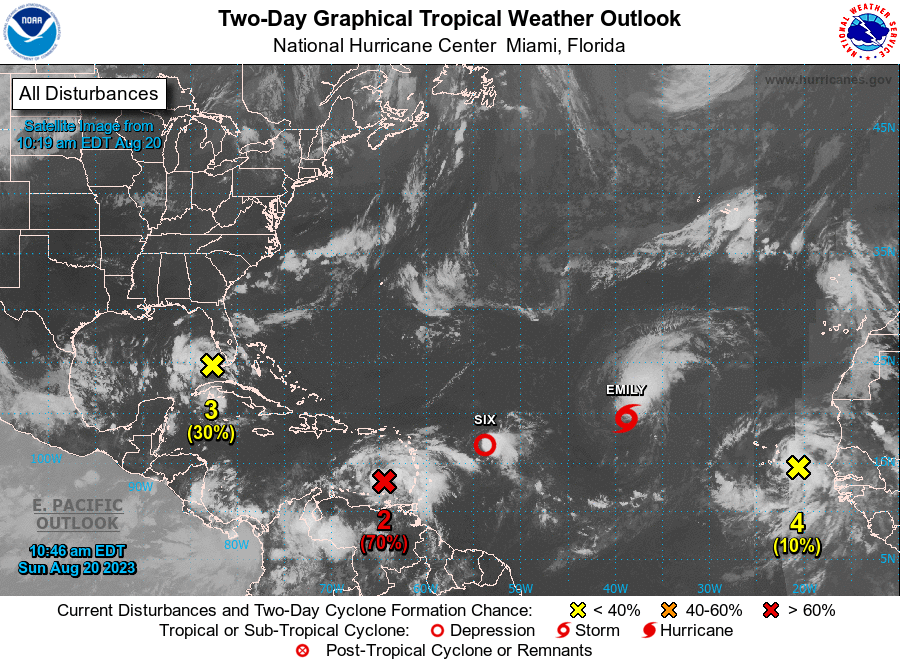
In the Atlantic, Saharan Dust has suppressed activity for the past few weeks, but now that it has moved out, there are several areas of interest, including a pair of storms.

Tropical Storm Emily has developed about 1000 miles west-northwest of the Cabo Verde Islands, moving toward the west-northwest at 10 mph. Maximum sustained winds are near 50 mph. Emily is expected to continue toward the west-northwest for the next day or two, but conditions will become increasingly hostile, with wind shear increasing over the next few days. This will result in steady weakening of Emily, with it likely become extratropical on Monday or Tuesday. After that it will turn toward the northwest and north, heading out into the open waters of the Atlantic, without impacting any land areas.

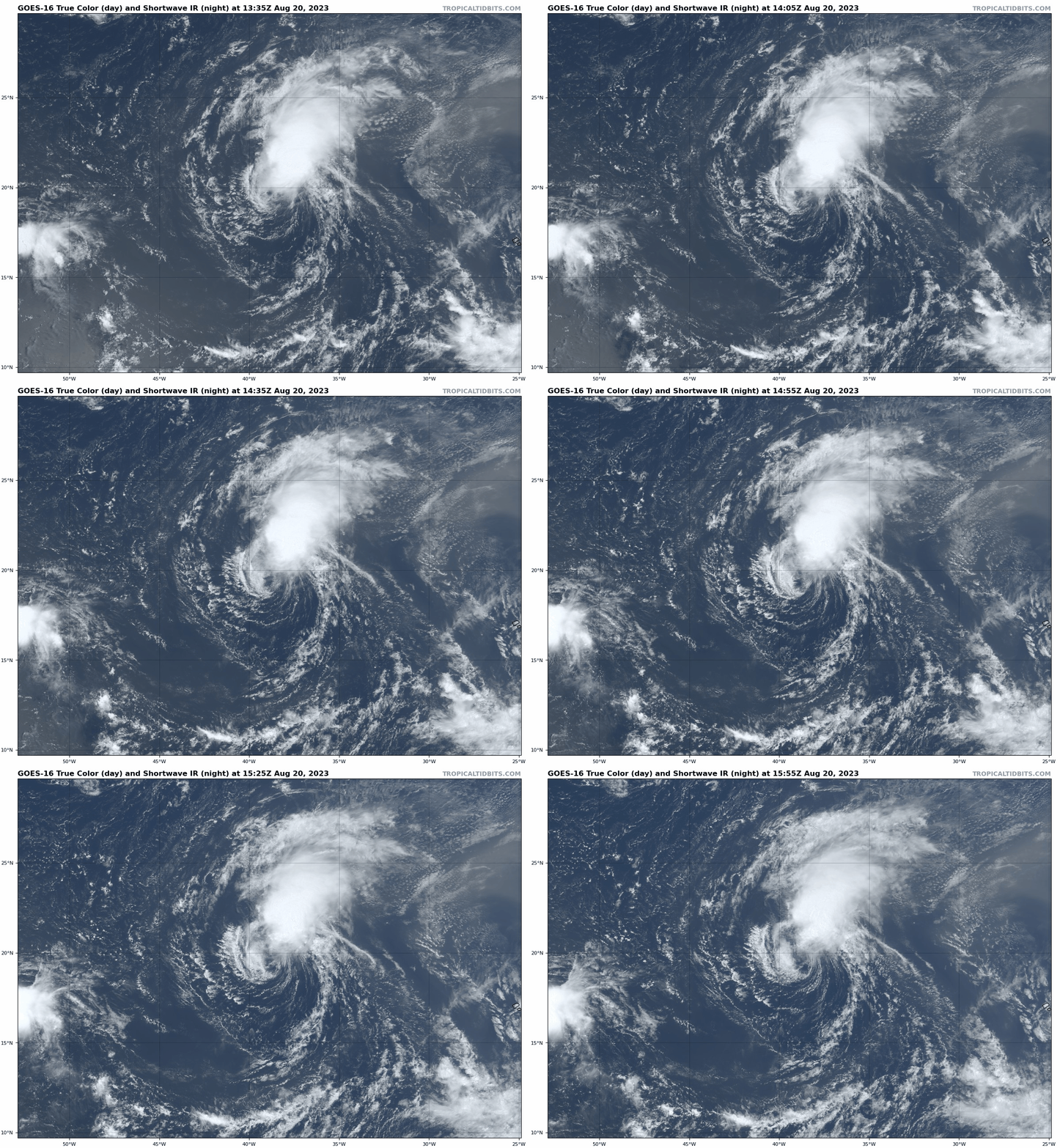
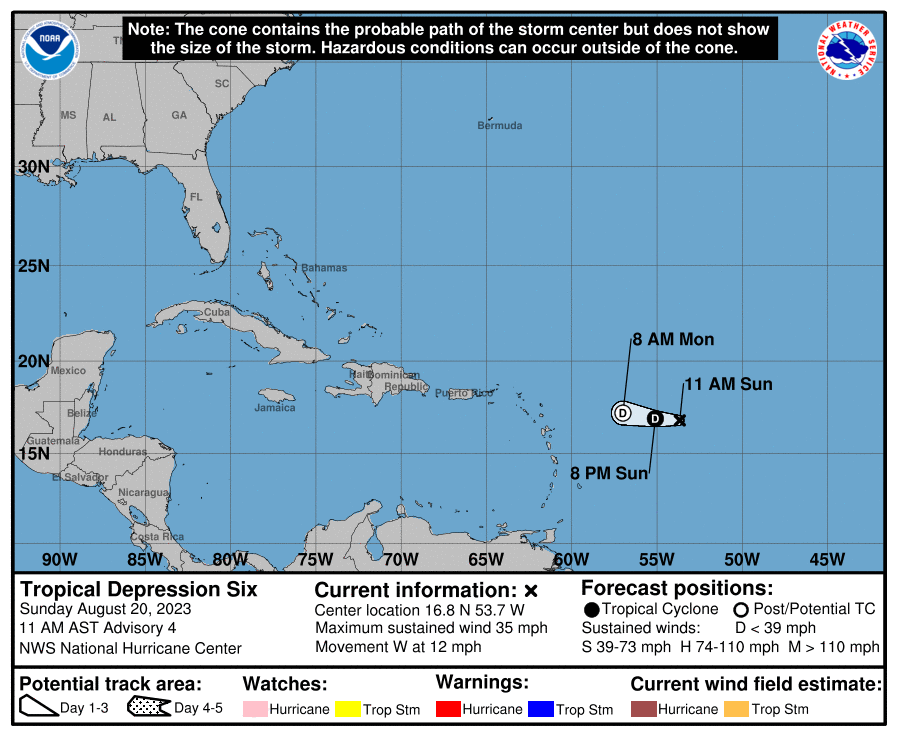
Tropical Depression Six is barely hanging on as an organized system about 625 miles east of the Northern Leeward Islands. Top winds are near 35 mph, and it is moving toward the west at 12 mph. Wind shear is ripping this system apart, and it is expected to dissipate over open water later today or tonight.

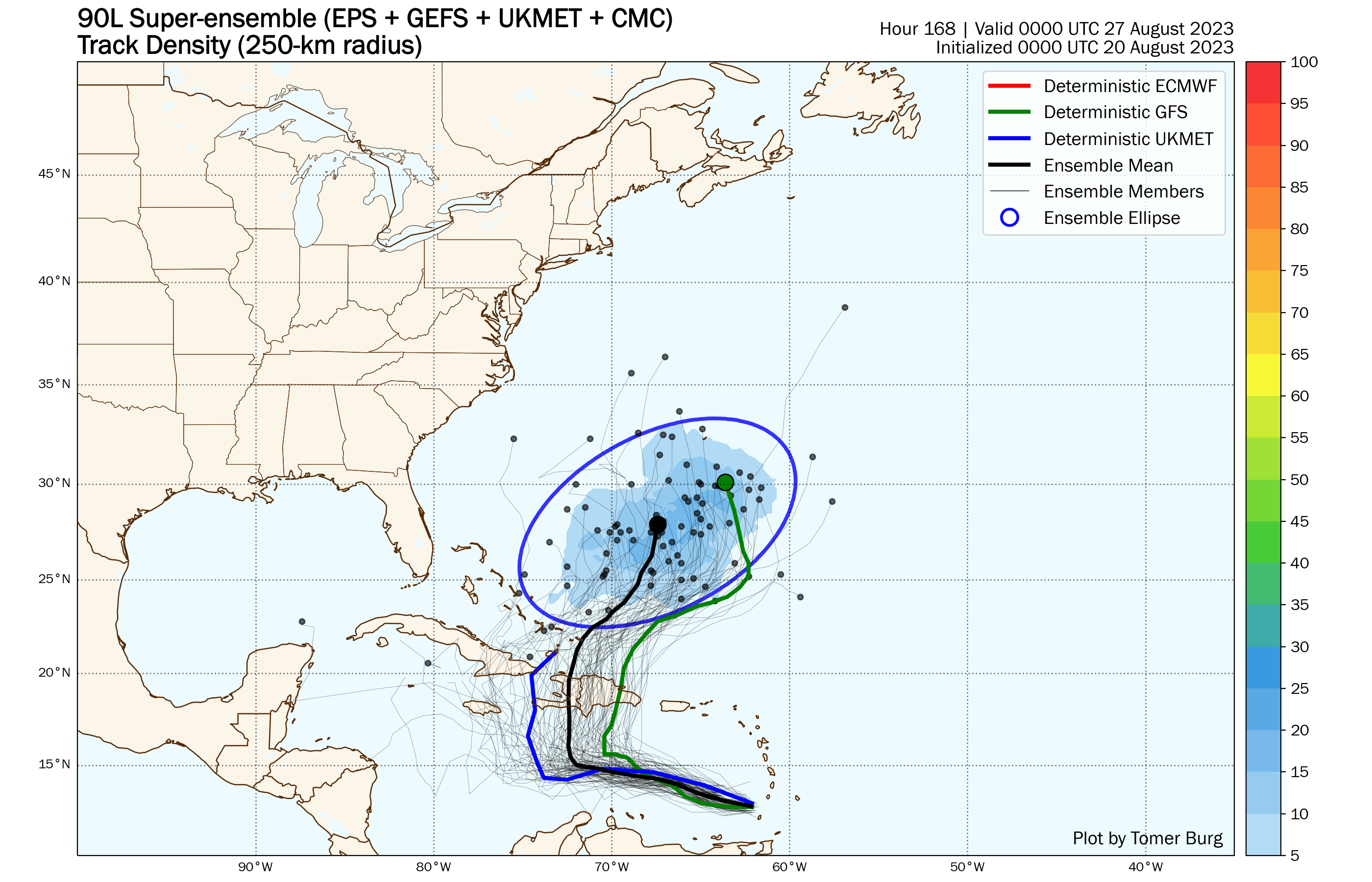
Another area of low pressure is moving across the southeastern Caribbean Sea this afternoon, producing numerous showers and thunderstorms across the eastern Caribbean. It should continue toward the west-northwest for the next day or two, and conditions are favorable for it to continue to develop. Reconnaissance aircraft are scheduled to investigate this system during the afternoon to check on the structure and strength of the system. It will continue to produce heavy rain and gusty winds across the northern and eastern Caribbean for the next few days, but it should turn more toward the north early this week, which will increase the threat to some of the islands, depending on when the turn occurs. Right now, it looks like Hispaniola will have the biggest threat, but this is predicated on when (or if) that turn occurs. It should eventually move north of the islands, possibly near the Turks and Caicos Islands, before heading out into the Atlantic. Once into the open waters of the Atlantic, it could become a potent storm system, but again, this is dependent on what it does in the next few days first.

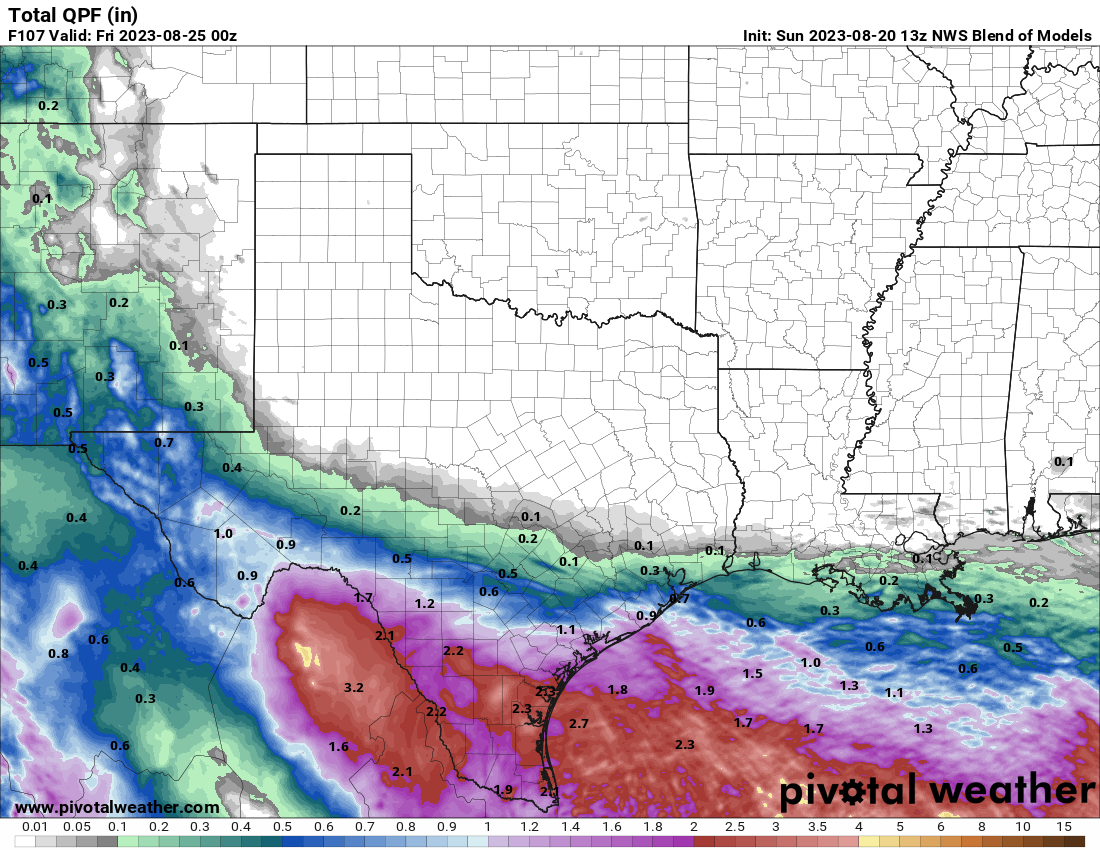
An area of low pressure that brought heavy rain and thunderstorms to the Bahamas and southern Florida has moved into the Gulf of Mexico this afternoon. It is expected to continue westward across the Gulf over the next few days, with some development possible. It could become a tropical depression toward midweek before approaching the Texas coastline. Whether it develops or not, it should bring some much-needed heavy rain to parts of central and southern Texas later this week, helping to not only put a dent in the ongoing drought in the region, but also provide some relief from the heat.

Yet another tropical wave has moved off the African coast and into the eastern Atlantic. Conditions will be favorable for development over the next several days, and it could become a tropical depression later this week. If it does develop, it is expected to remain over open water, with no impact to land areas through at least next weekend.
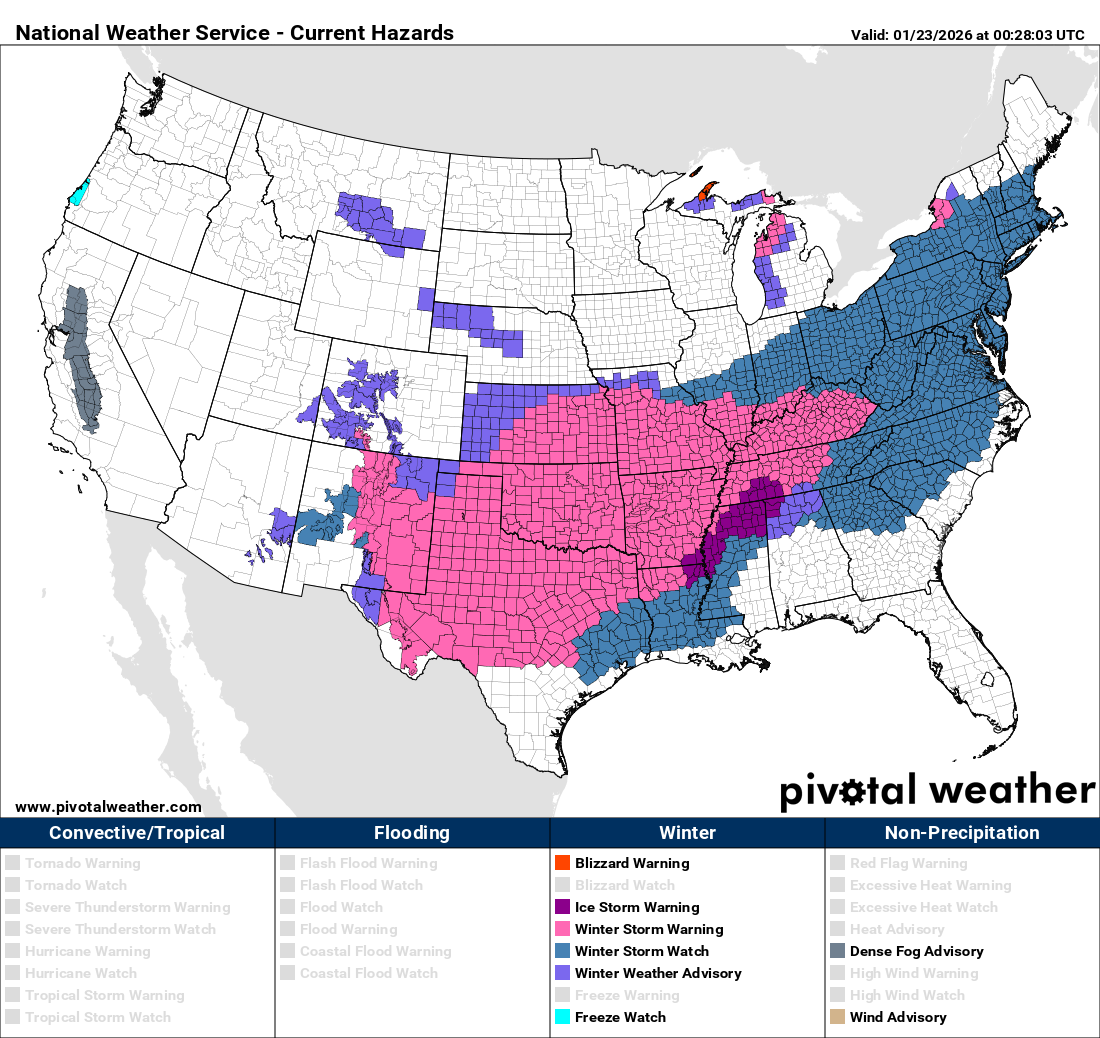
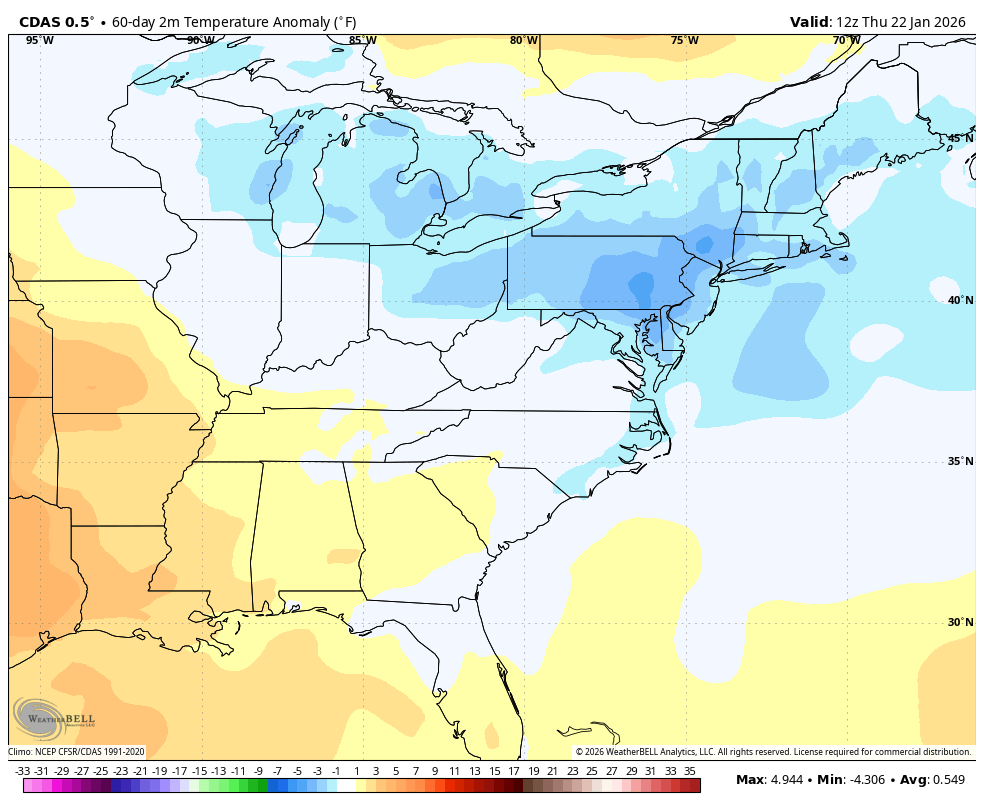
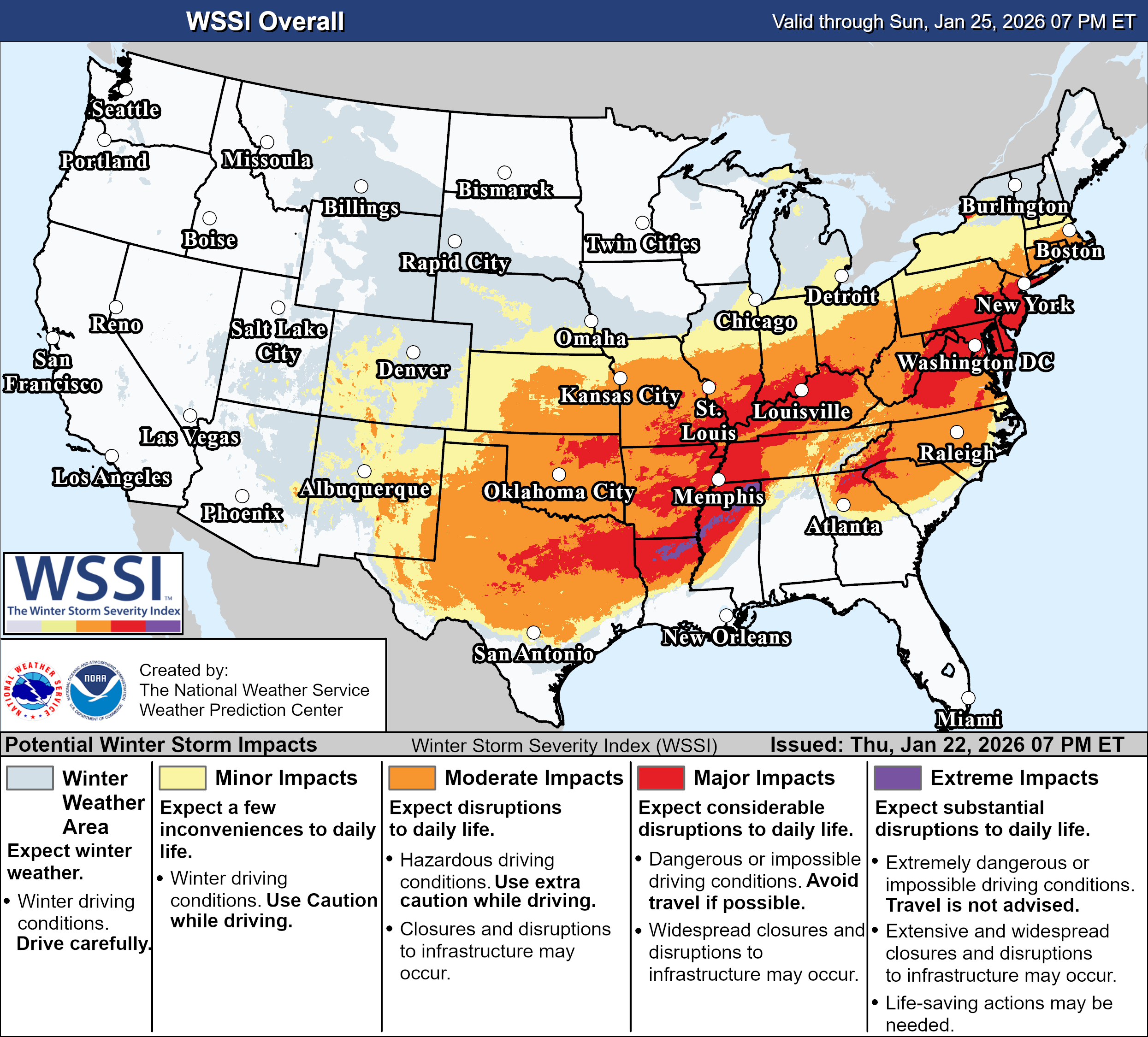
Winter will finally make an appearance across a large portion of the nation during the upcoming week.

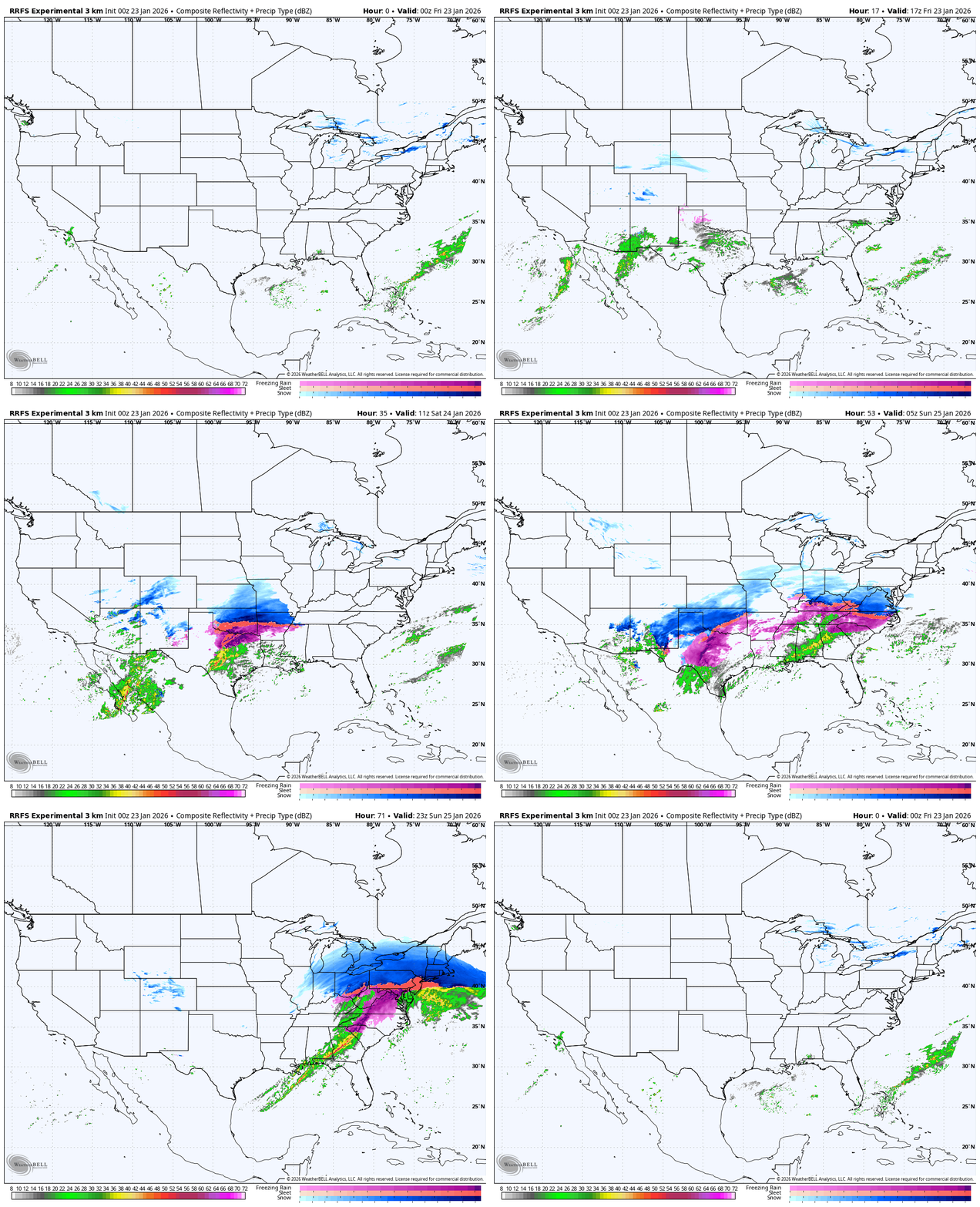
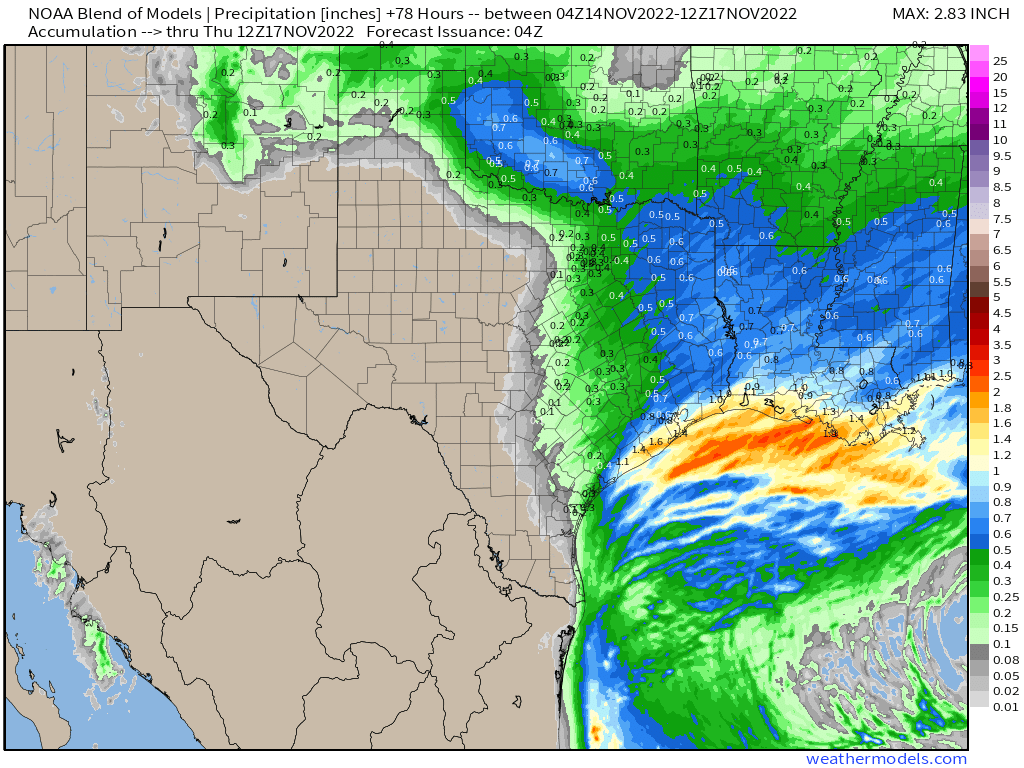
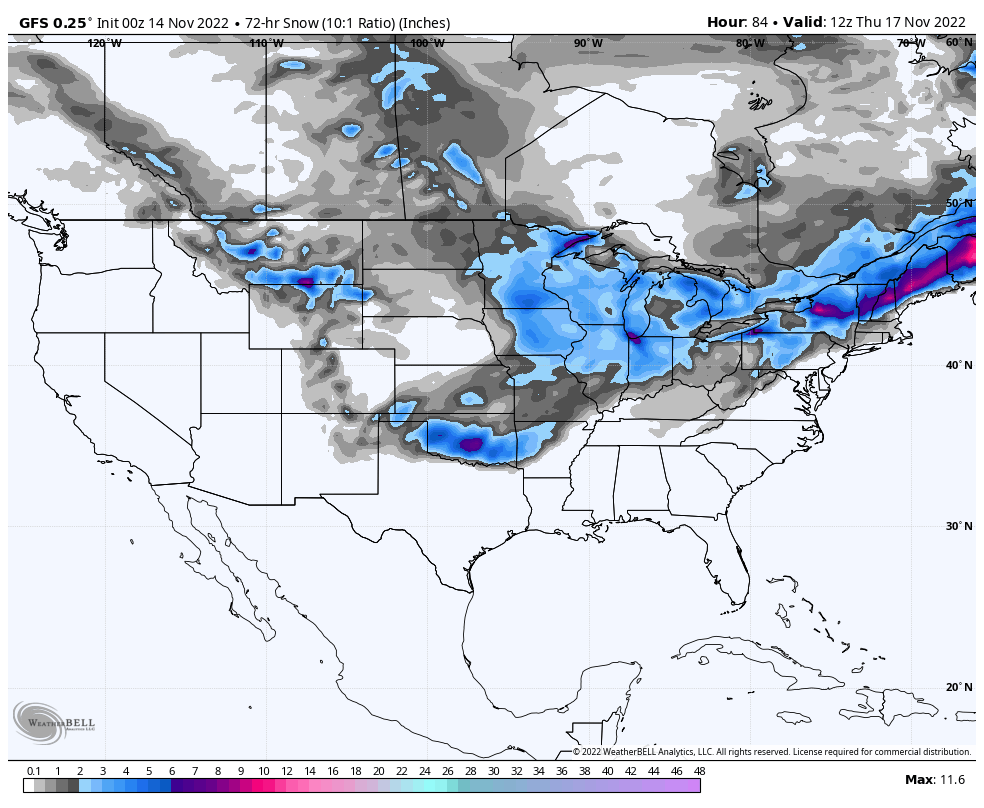
Low pressure will move out of the Southwest and across the Southern Plains today, before heading across the Deep South and then off the Mid-Atlantic coast by midweek. To the south, it will produce showers and thunderstorms across parts of Texas and eventually the Gulf Coast and the Southeast over the next few days. Some strong storms are possible, but a severe weather outbreak is not expected. The bigger story will be what takes place north of the system. Some light snow or a wintry mix will move across the Plains states today and into the Mississippi Valley tonight and Tuesday. While the snow won’t be heavy, a few inches could accumulate in some spots, which will be the first accumulating snow of the season for some locations.

By later Tuesday, as the low moves off the Mid-Atlantic coast, a second, weaker low will also move across the Midwest, producing some light snow across this region, with rain across the Tennessee Valley. As both of these lows head eastward, precipitation will move into the Northeast. Precipitation may start as a wintry mix early Wednesday across the northern and western suburbs of New York and Boston, but for the cities of the I-95 corridor, this will be mostly a rainstorm. Farther inland, from central Pennsylvania into much of Upstate New York, and Northern New England, several inches of snow could accumulate before any potential changeover to rain. As the storm intensifies off the East Coast, heavier snow is possible in parts of northern and eastern Maine and into Atlantic Canada.

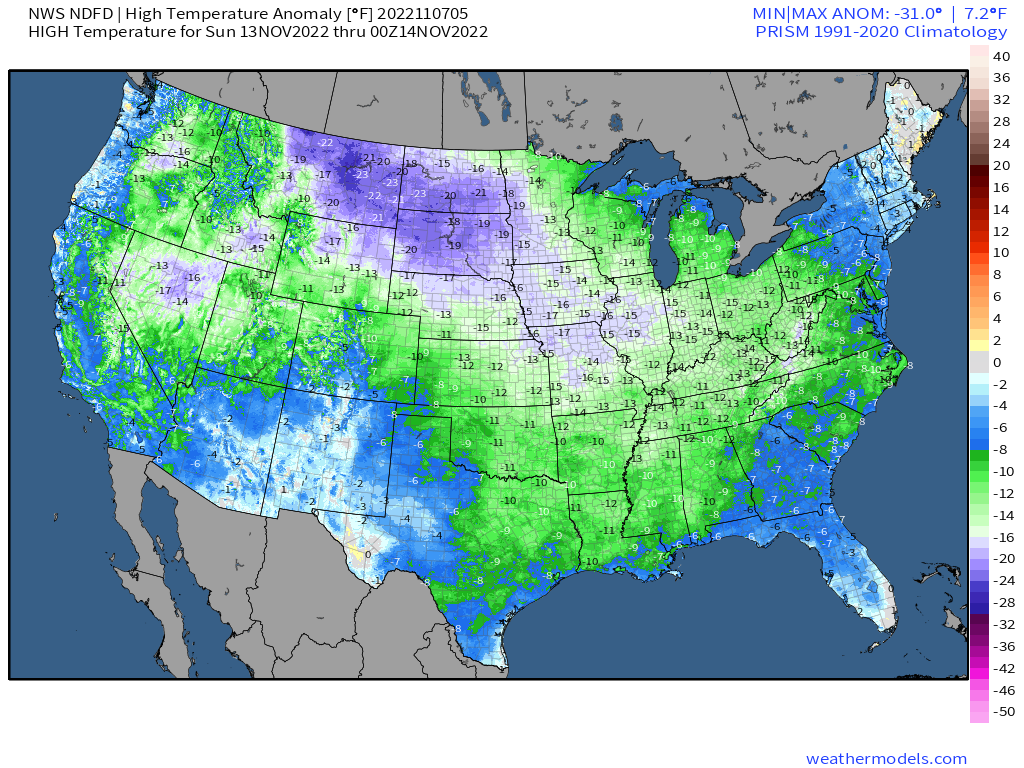
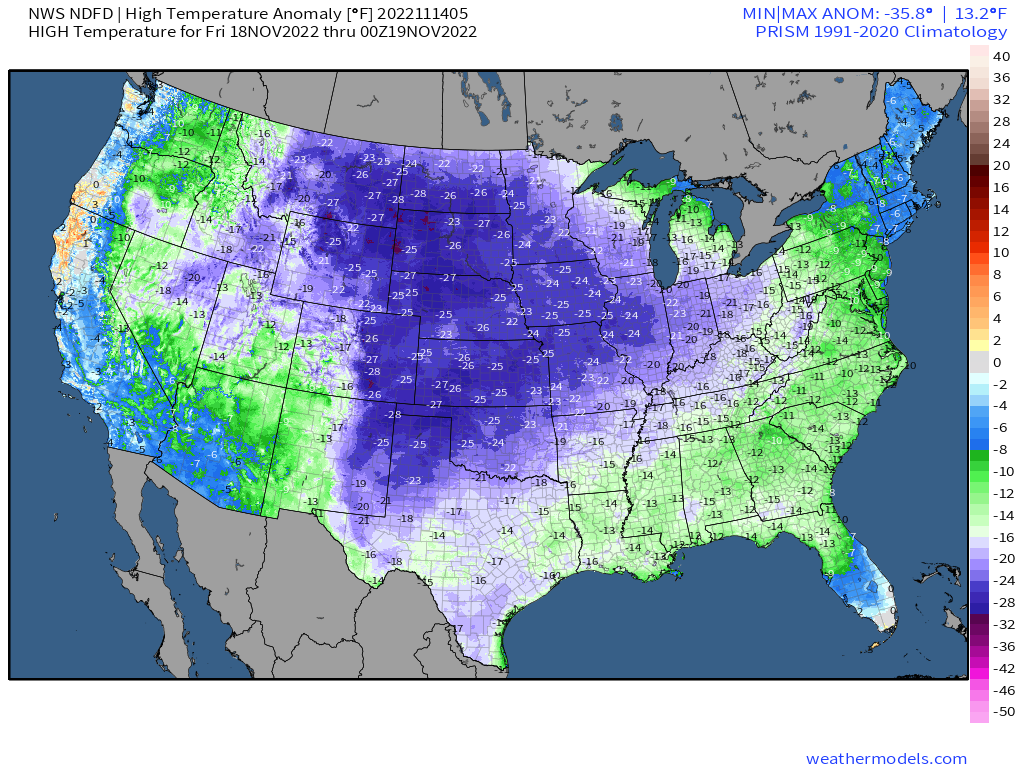
While temperatures are currently below normal across most of the nation, even colder air will spill southward from Canada behind this storm. By the end of the week, some record lows are possible, especially in parts of the Plains States and Northern Rockies, where some sub-zero temperatures are possible. By the end of the week, below normal readings are likely across most of the nation except for the immediate West Coast, and parts of southern Florida. From the Appalachians westward to the Rockies, temperatures will be 15 to 30 degrees below normal for the end of the week and into next weekend.

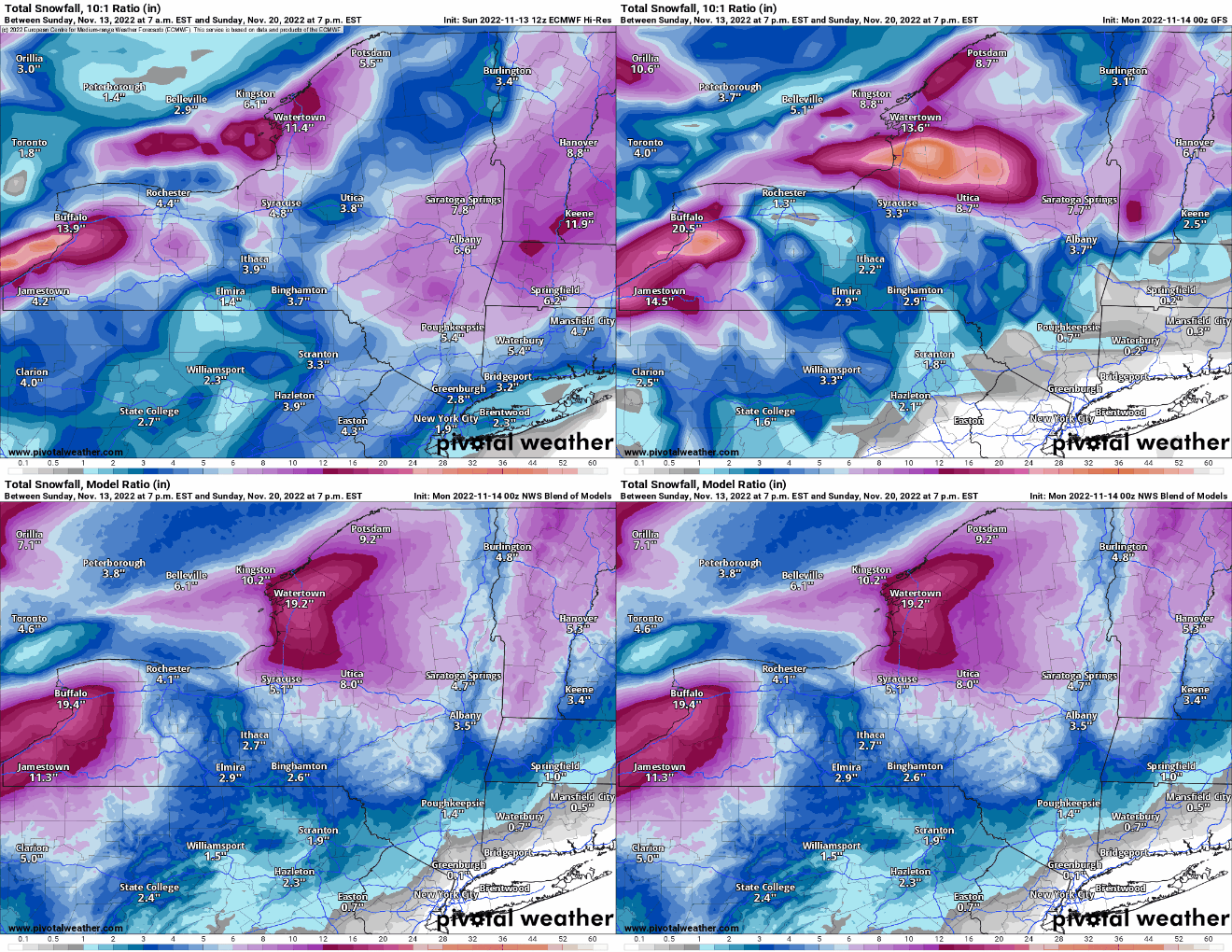
As that cold air pours over the Great Lakes, some lake-effect snow is expected. Locations downwind of Lakes Superior and Michigan could see several inches of snow by mid-week, similar to what they had over the weekend. However, it’s the areas downwind of Lakes Erie and Ontario that could see some exceptionally heavy amounts. Totals could exceed a foot from Buffalo to Cleveland, with the location of the heaviest snowfall obviously dependent on the wind direction, but its the area east of Lake Ontario, specifically the Tug Hill Plateau of northern New York that could see the heaviest amounts.

A very active week is expected across the nation this week, with everything from hurricanes to blizzards, and record highs to record lows expected.

Low pressure is moving into the Pacific Northwest this morning, with rain strong winds, and mountain snow expected. As this storm spreads inland, heavy rain will spread across most of the West, including all of California, with heavy snow across the higher elevations and through the Great Basin and into the Rockies. Winter Weather Advisories, Winter Storm Warnings, and High Wind Warnings are in effect for many locations already. Rainfall totals of 1-2 inches and locally heavier will be welcomed across California, helping to put a dent into the drought and aiding efforts to extinguish the many wildfires still burning across the West. Across the mountains, snowfall totals of 1-2 feet and locally heavier are expected in parts of the Cascades and Sierra Nevada, with up to a foot possible across the mountains of the Interior Northwest and Northern Rockies.

By Thursday, the system will move into the Plains and toward the Great Lakes. Ahead of the storm, record high temperatures are possible once again, with the threat of some severe weather in the Mississippi Valley. However, it’s across the Northern Plains and Upper Midwest where impact will be the greatest. The combination of strong winds, gusting to 40-50 mph, and heavy snow, possibly as much as 8-16 inches across parts of the Dakotas and northern Minnesota as well as the southern Canadian Prairies, will result in blizzard conditions at times later Thursday into Friday.

Behind the storm, especially with fresh snowcover, some of the coldest air so far this fall will pour into the Rockies and Northern Plains with high temperatures for the end of the week and the weekend only in the teens and 20s, and some subzero low temperatures likely. As that storm continues into southeastern Canada, it will drag a cold front across the eastern third of the nation for the end of the week. By the time it reaches the East Coast late Saturday, nearly the entire nation will experience temperatures that are below normal for mid-November, a rather big change from what the eastern half of the nation has experiences for the past couple of weeks.

While all this is going on, we also need to pay attention to the tropics. Hurricane Season doesn’t officially end until November 30, and we’re keeping an eye on two separate areas at this time. The first is centered a few hundred miles east of Bermuda. As it drifts around over marginally warm waters, it could become a subtropical or tropical storm over the next day or two. It likely won’t last that long, as a strong cold front moving off the East Coast today will absorb this system by midweek and send it out over the colder waters of the North Atlantic.

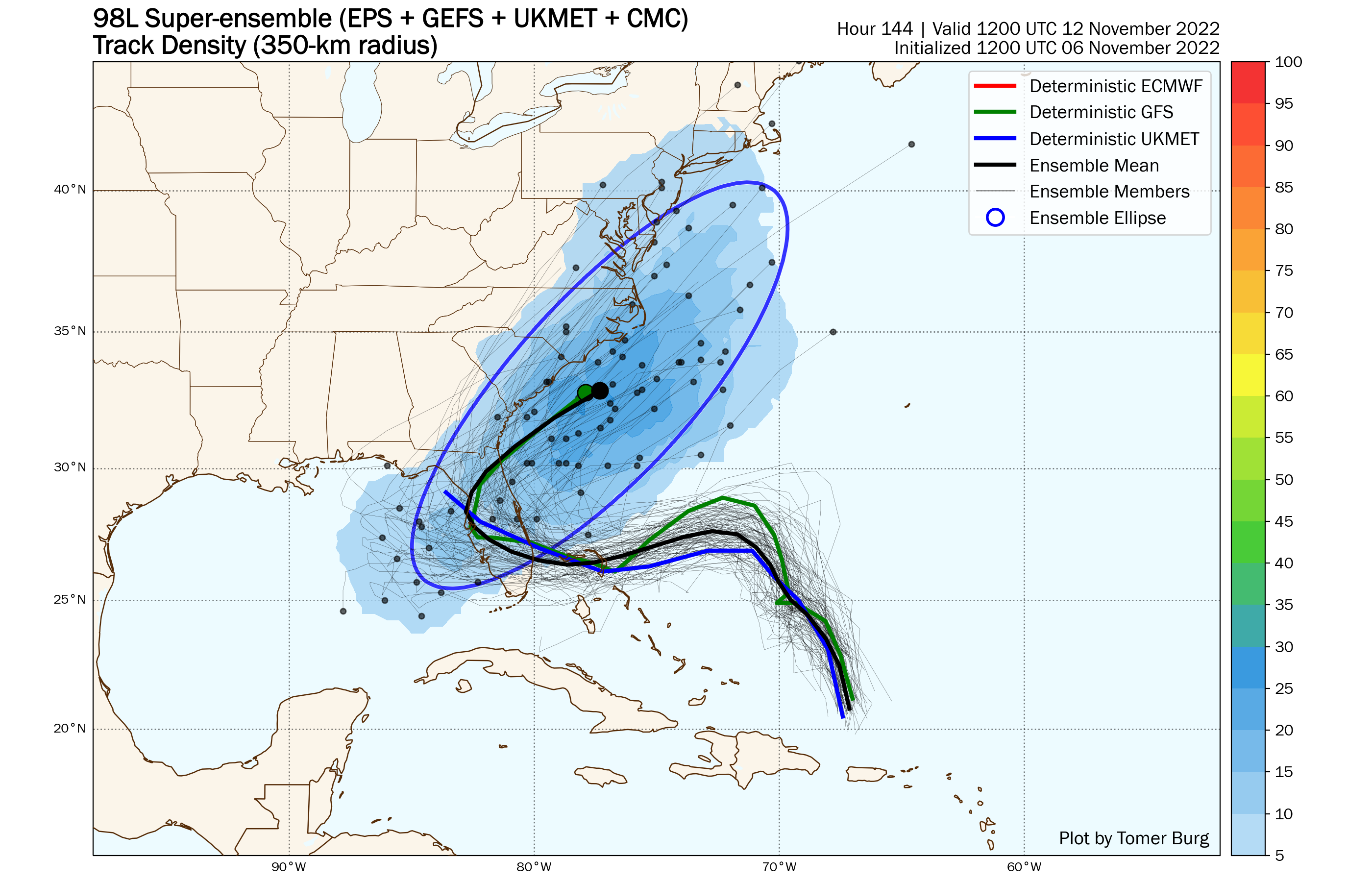
The second area is a much bigger concern. A low pressure area few hundred miles north of Puerto Rico has been producing heavy rain across Puerto Rico and the Virgin Islands for the past few days, with rainfall totals of 5-10 inches producing flooding in some locations. The system is expected to move northwestward while slowly organizing, and could become a tropical depression or storm over the next few days. Eventually, it will turn toward the west, passing close to or over the northern Bahamas, then heading toward the East Coast of Florida. Heavy rain, strong winds, and rough surf are likely across much of Florida as the system draws closer at mid-week. Some models have the storm close to hurricane strength before landfall somewhere across east-central Florida. After landfall, the mostly likely scenario is a turn toward the north and eventually northeast as a strong trough of low pressure moves into the Eastern US.

Once the system makes the turn, it will likely move back into the Atlantic and up the East Coast. While it will lose its characteristics, it will still produce heavy rain, gusty winds, and rough seas from the Carolinas northward to New England. Given its tropical origins, some of the rain could be especially heavy near the coast, with widespread totals of 2-4 inches possible. The strong cold front marching eastward will help kick the system out to sea later Saturday. If it does so early enough, it could result in less rain and wind across parts of New England.
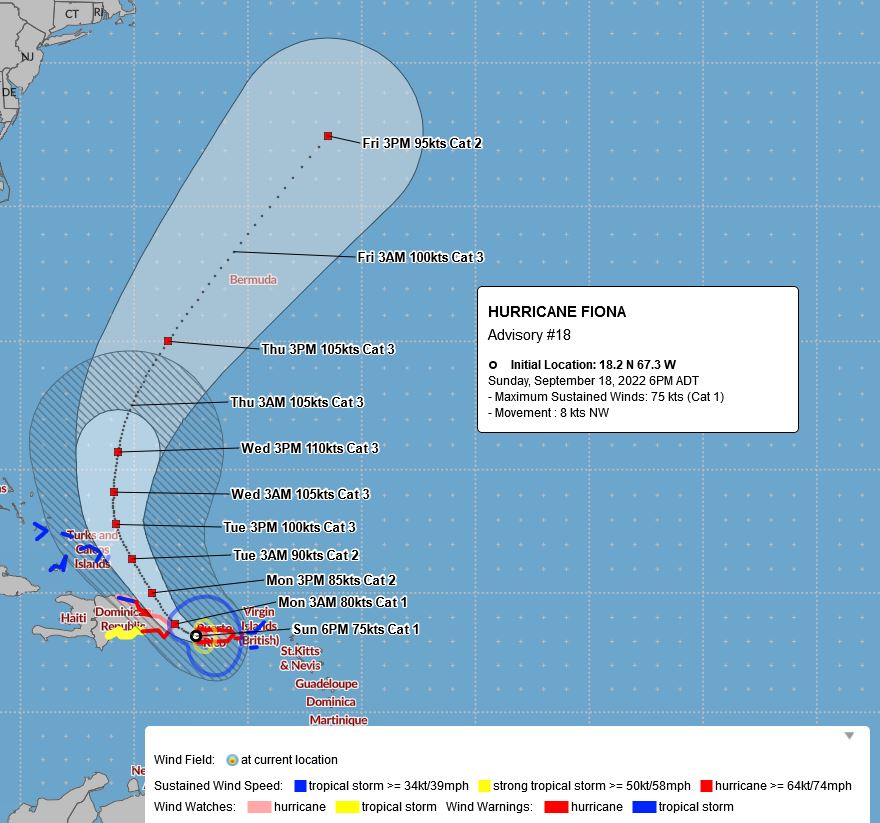
Hurricane Fiona is grabbing the headlines, but it’s not the only area we’re watching this week.

Hurricane Fiona produced strong winds and catastrophic flooding across parts of the northeastern Caribbean over the weekend, especially Puerto Rico, and today it’s the Dominican Republic’s turn. Once it moves back into the Atlantic later today, a northward track is expected for the next few days. It may bring strong winds and heavy rain to the Turks and Caicos as well as parts of the southeastern Bahamas over the next few days, but as it moves over open water, additional strengthening is expected. By the latter half of the week, it could have Bermuda in its sights. Its still too early to determine what, if any, impact it will have on Bermuda, but anything from a glancing blow to a direct hit as a major hurricane is possible. By the end of the week,, it should be heading out into the North Atlantic and starting to weaken, though residents of Atlantic Canada and Newfoundland should keep an eye on Fiona.

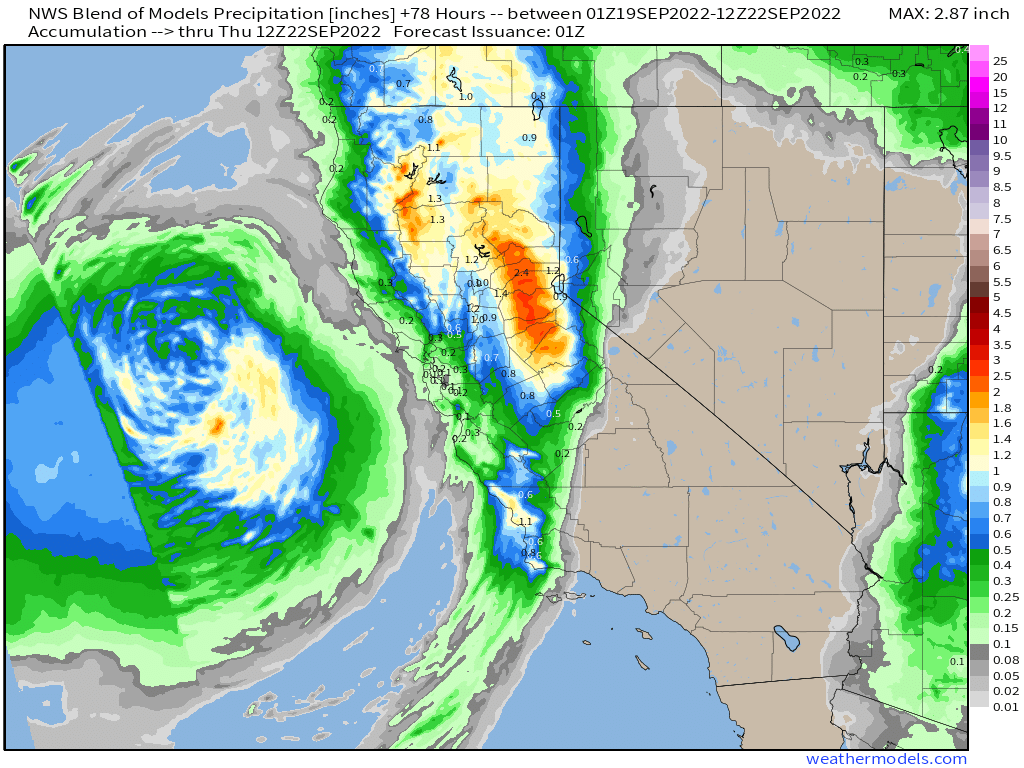
Out West, an early-season storm will bring some much-needed rainfall to parts of California over the next few days. The rain began Sunday, but will continue into Tuesday or even Wednesday in parts of the state. Some spots could pick up 1-2 inches or more by the time everything winds down. This will help put a small dent in the ongoing drought across the state, but will also be a big help to the firefighting efforts for the numerous wildfires burning across the region.

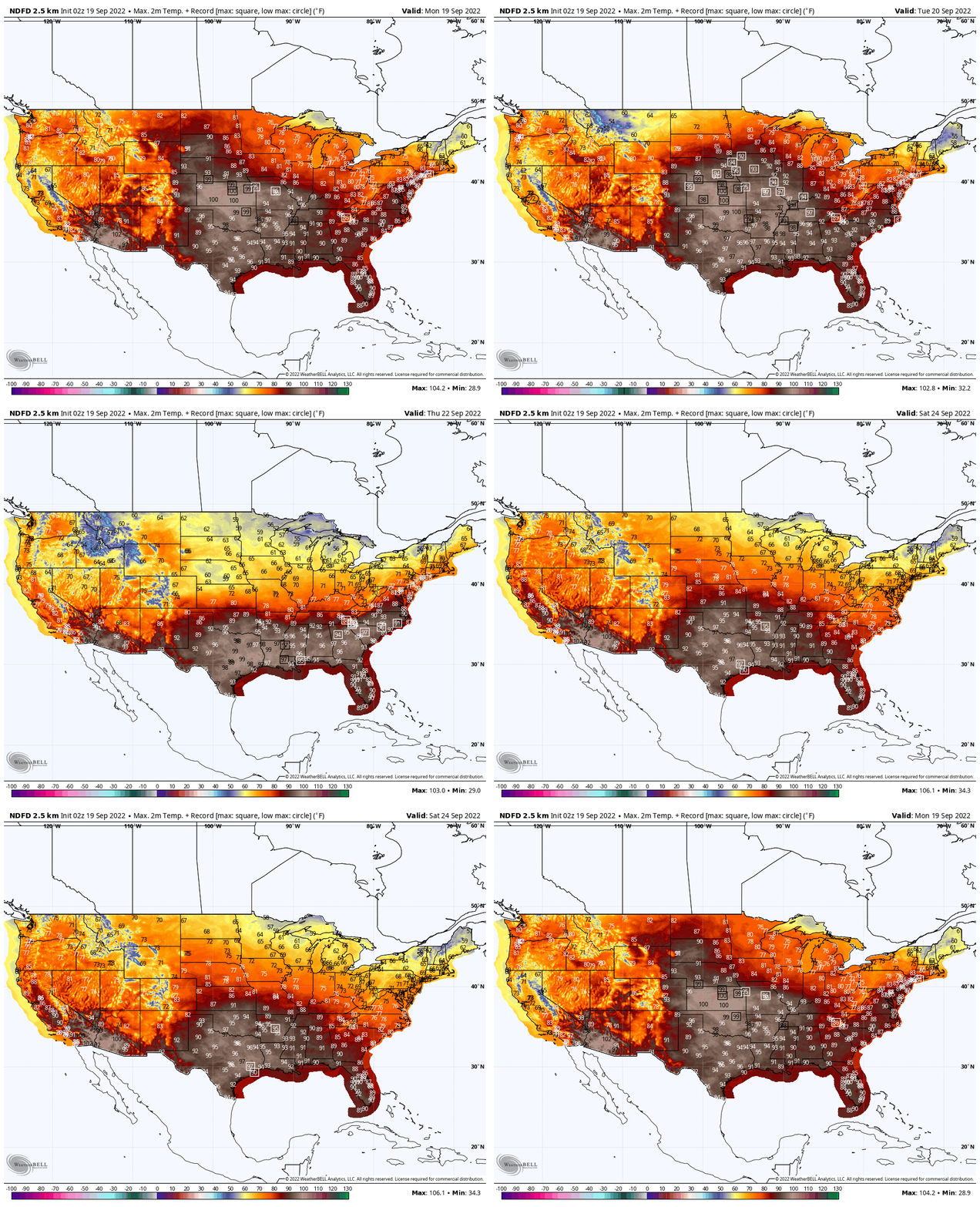
Heat will return to the nation’s midsection over the next few days, gradually spreading into parts of the Mississippi Valley and the Deep South as the week goes on. High temperatures well into the 90s and possibly lower 100s are expected, which is 10-to-20 degrees above normal for late-September. Many record high temperatures are expected over the next several days.

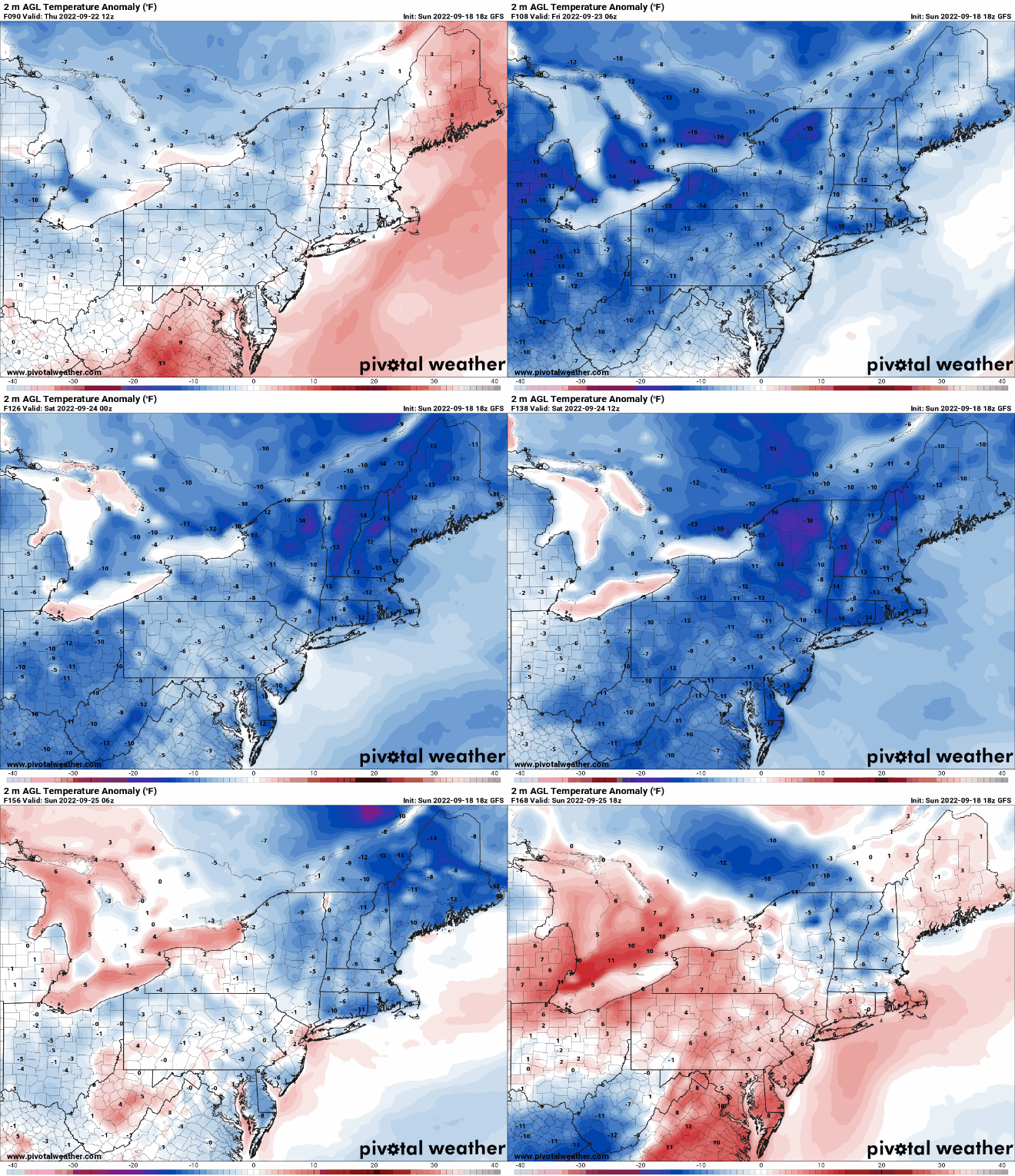
While heat covers much of the nation, late in the week, cool weather will be the story from the Northern Plains to the Northeast. A strong cold front will produce some rain across these areas during the latter half of the week, but behind that front, much cooler air will settle in. Frost and freezing temperatures may bring an end to the growing season from parts of the Great Lakes into northern New England by the end of the week. In fact, as that front moves through, the rain may mix with or even change to wet snow across some of the higher elevations of northern New York and New England Thursday night and early Friday. While this is a bit early, it’s not that unusual for some of the higher peaks to see snow in late September. Atop New Hampshire’s Mt. Washington snow has already been reported a couple of times this month.