Winter of 2025-2026 left the snowpacks of the Rockies in a dire state. Combined with one of the warmest winters on record and a looming El Nino, most Western states are looking at a worsening drought for the summer. Cities across the West saw record low snowfall and record high temperatures this past winter. Combined with an abnormally warm March, snowpack in the mountains is at the lowest it has been since records were first kept.
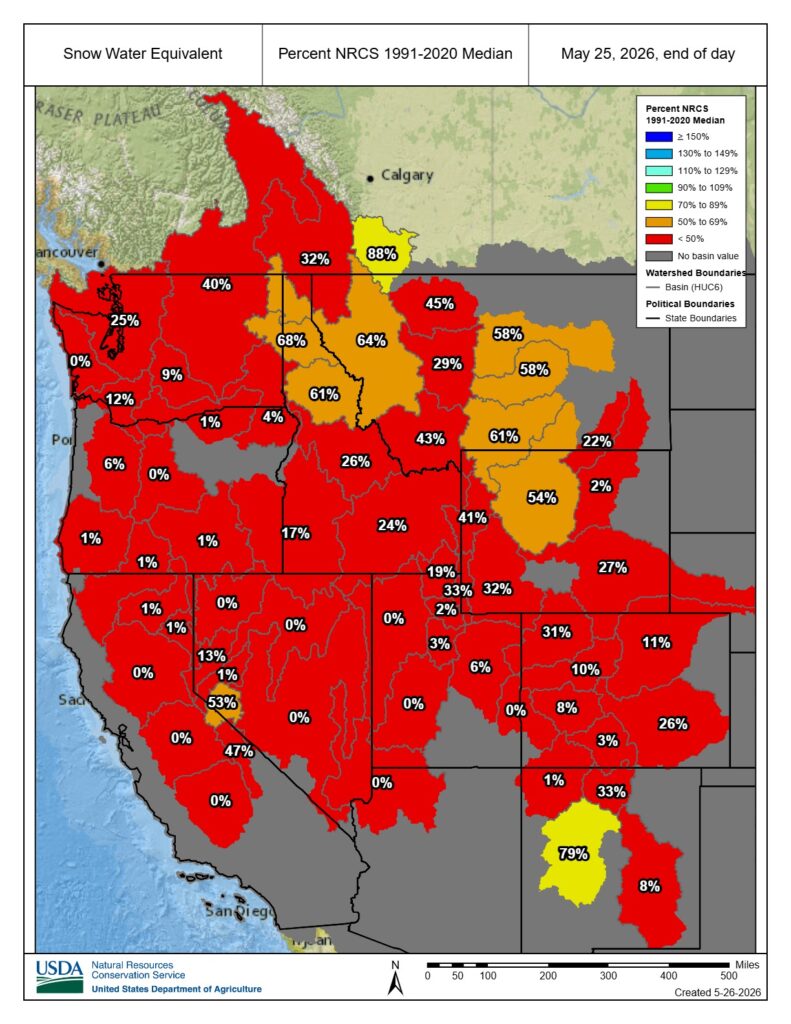
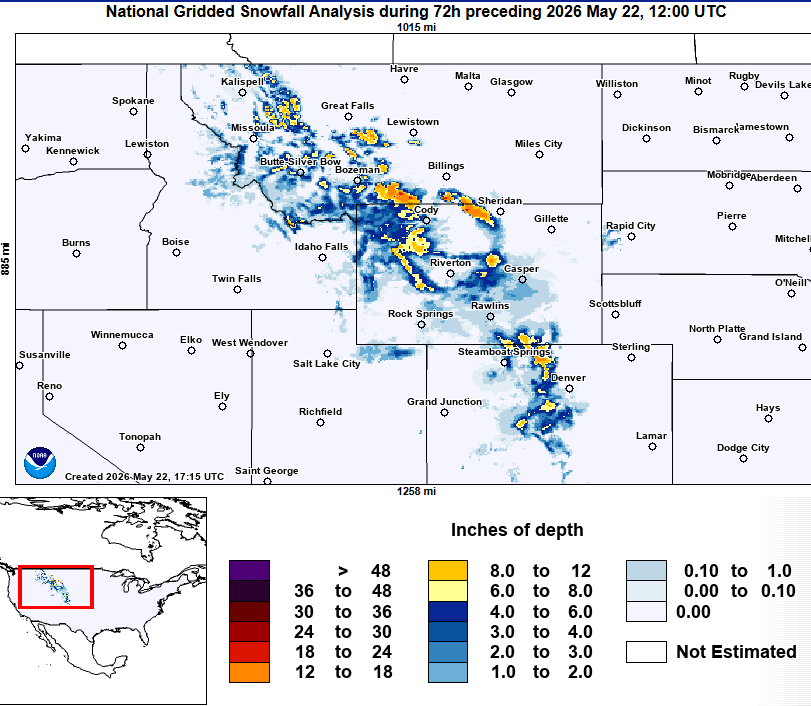
In portions of Colorado, Wyoming, and southwestern Montana, most of the season snowfall occurs during the fall and in the Spring, not in the winter like much of the remainder of the nation. This year, the majority of the snow has fallen in the Spring, with multiple late season snowstorms have helped to replenish the snowpack. Most of this is falling in the mountains, where the majority of the snowpack typically resides.
Low snowpack in the West, combined with warmer temperatures earlier in the year, have detrimental effects going into both Spring and Summer. Normally, warmer temperatures arrive in during May and June, allowing the snowmelt to provide a semi-constant source of water, keeping soils moist and vegetation wetter into the warmer months. With the snowpack being at effectively zero this year, it creates an environment that is prime for wildfires, as vegetation and soil dry out early in the season.
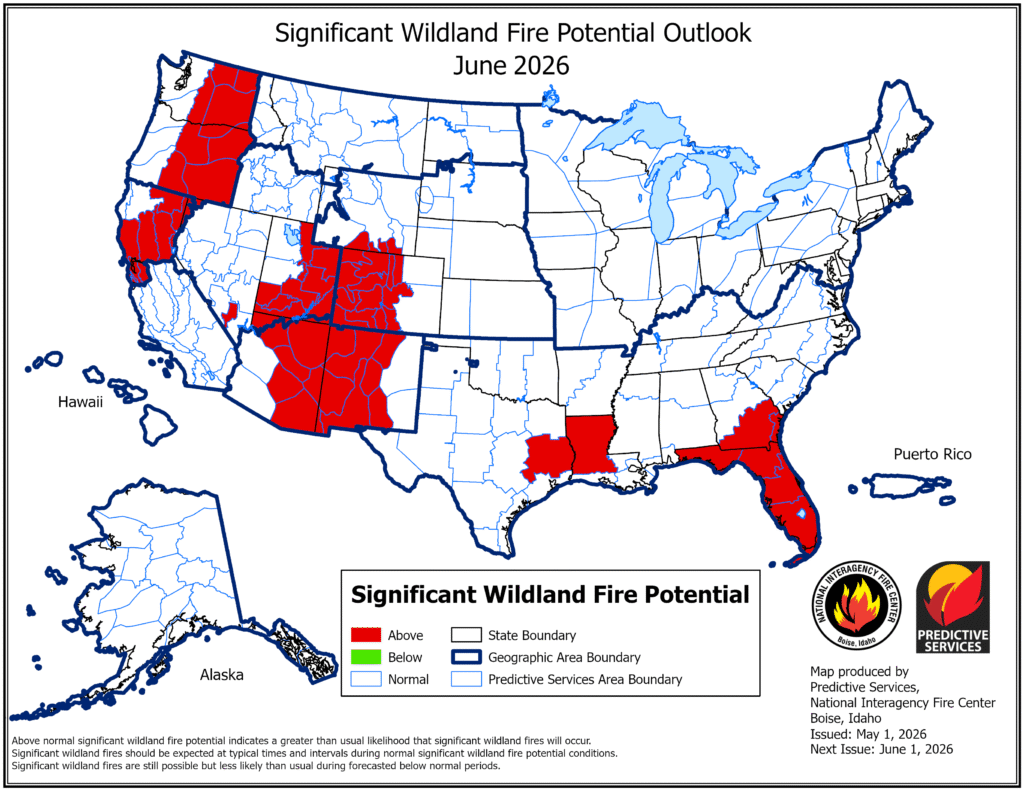
With below average precipitation and above average temperatures expected in the coming months, the drought that has been gripping the region is also expected to expand, further increasing the risk of wildfires. Alongside the increased risk of wildfires as the season starts earlier comes the increased risk of more severe wildfires as more vegetation becomes drought stressed.
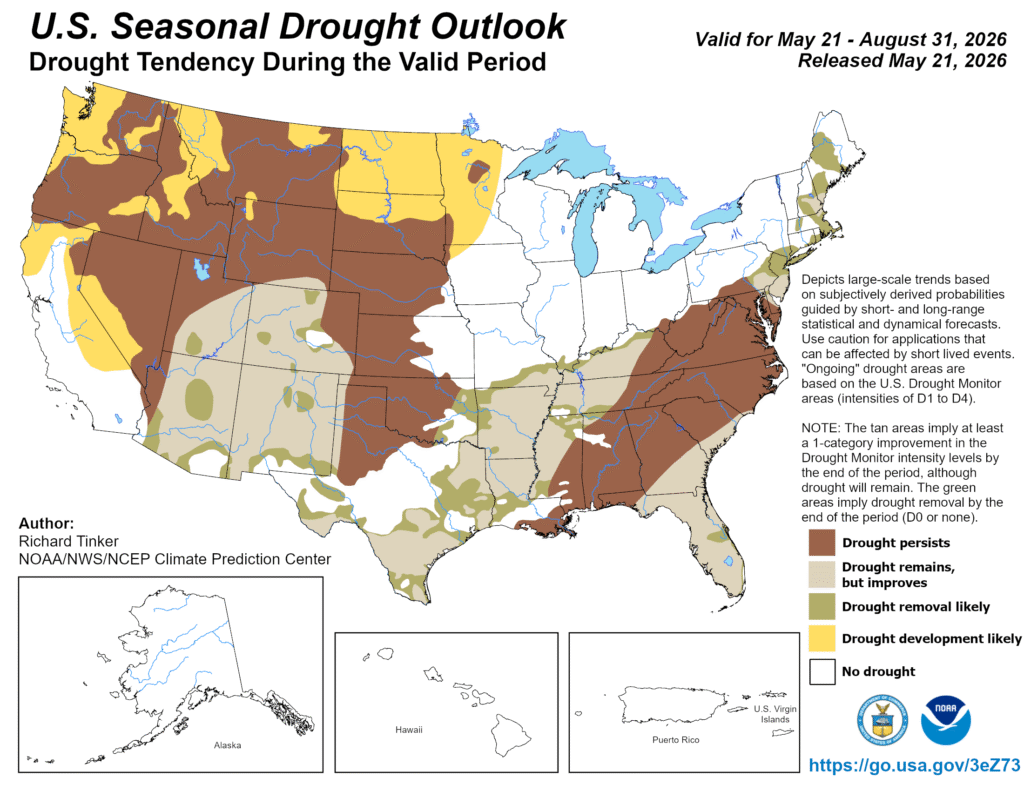
Over the several weeks, precipitation across most of the Central and Northern US is expected to be below normal. Rainfall should continue across much of the Southeast, alleviating drought concerns there. Similar conditions are also expected in the Southwest as the annual monsoon develops.
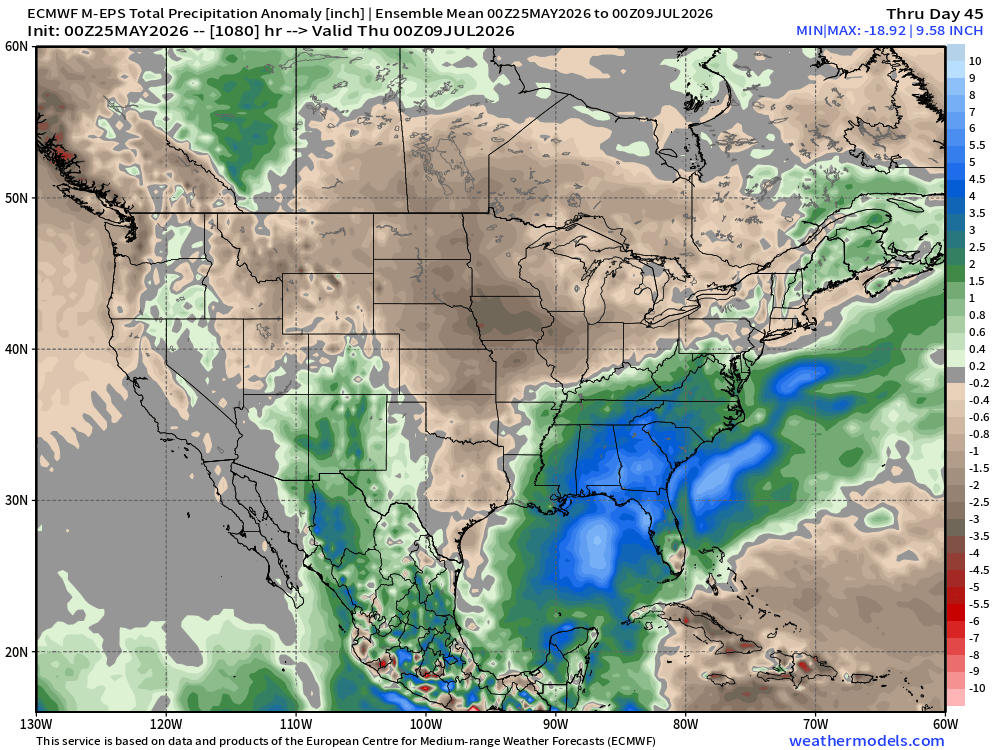
With a developing El Nino, more rainfall is expected across the southern tier of states over the coming months, with drier conditions to the north.