Halfway through June, and the Great Lakes surface temperatures range from average to well below average. From Lake Erie being the shallowest, and Lake Superior being the largest, they play a large part in controlling the climate of downwind regions.
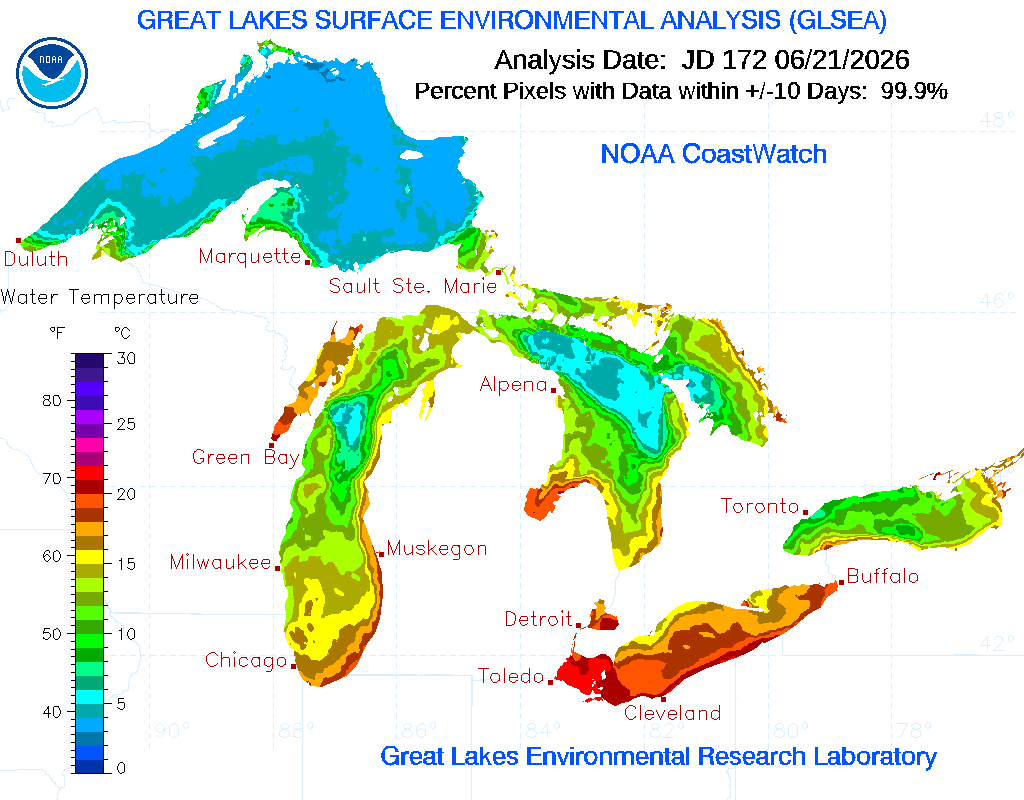
Befitting of its name, Lake Superior is the largest of the Great Lakes. Acting as a barrier between northerly winds and the Upper Peninsula of Michigan, Lake Superior helps keeps temperatures cool and assists in stabilizing the weather, though if conditions are setup just right, it can bring heavy lake effect snow to those same locations. In June, Lake Superior’s surface temperatures are below average, resting below 40 degrees across the lake. At this time of year, Lake Superior is typically in the lower to mid 40s.
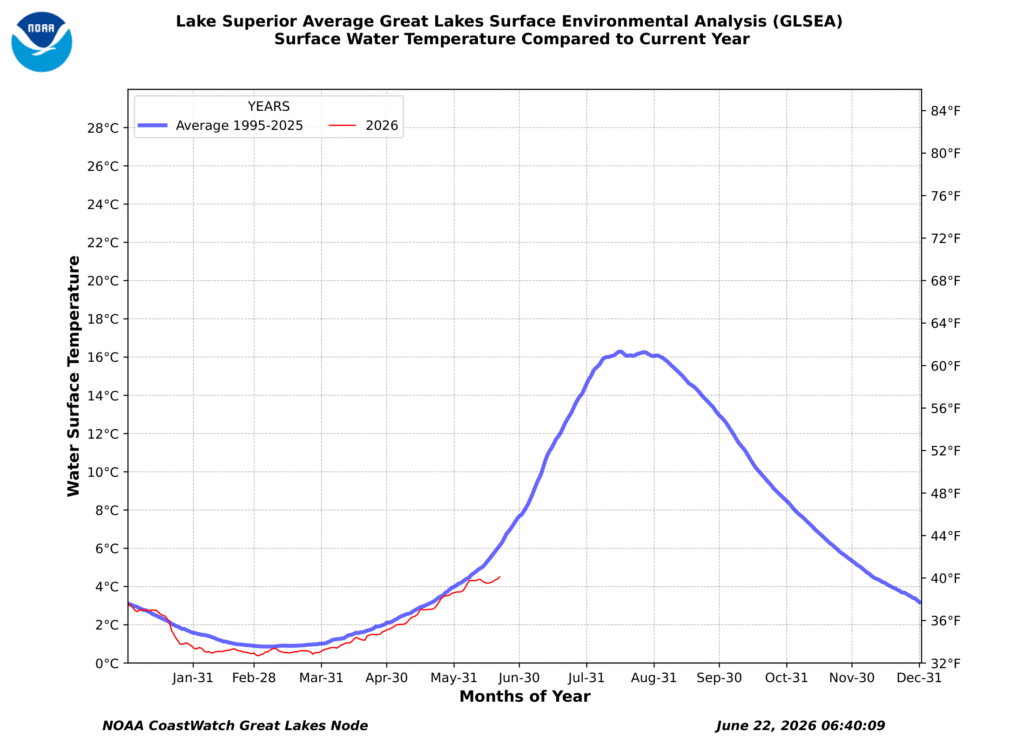
Graph provided by NOAA
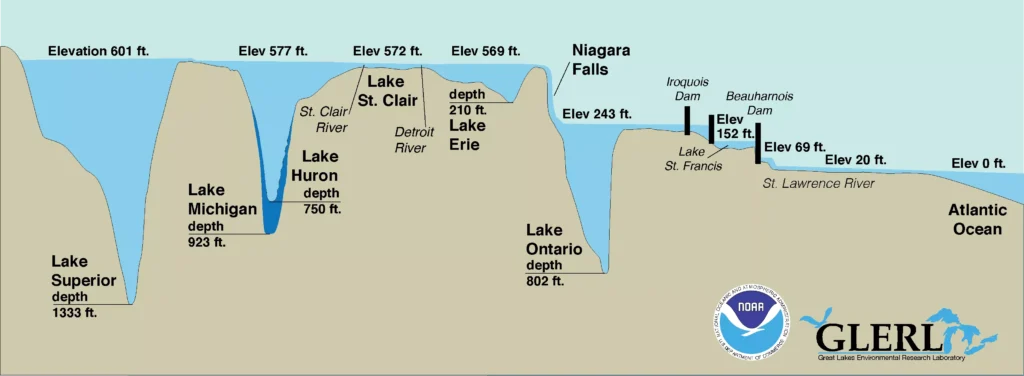
Lake Superior is the deepest of the great lakes sitting at an average of 483 feet. Its deepest point sits 1332 feet below its surface, deep enough to submerge the Empire State building, not including its spire. But not all of the great lakes are this deep. Lake Erie holds the title as the shallowest of the Great Lakes, sitting at a mere 62 feet deep on average. Its deepest point rests at 210 feet.
In relation to its low average depth, Lake Erie has the warmest temperature on average, as its thermal reservoir of water is much shallower than that of the other great lakes. Lake Erie is currently sitting at mid to high 60s, which is right on average temperature for where it should be for mid June. It also cools the quickest, allowing ice to form on it earlier than any other lake.
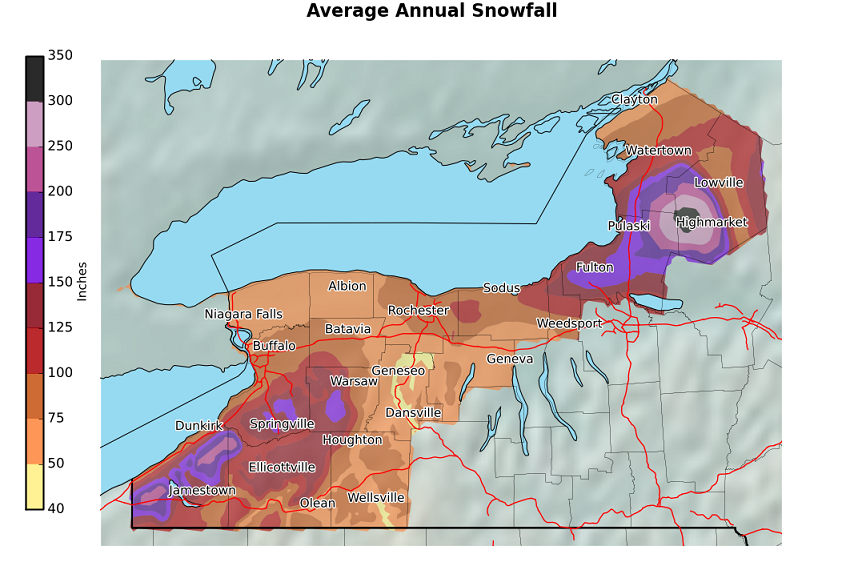
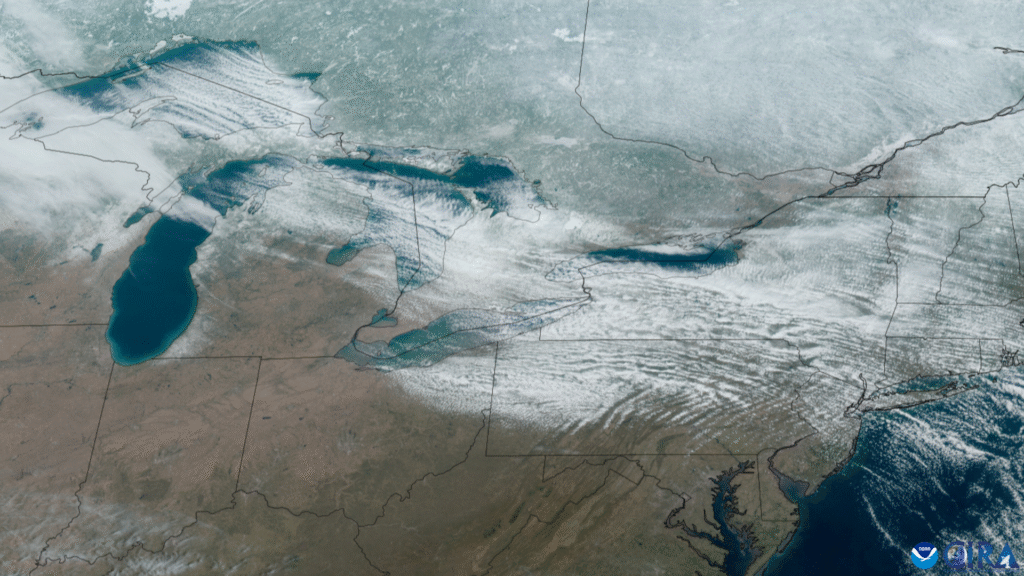
Lake Ontario Produces the most lake effect snow of the Great Lakes, though Lake Erie and Buffalo, NY typically make the news more. In the winter of 2025-26, Lake Ontario produced nearly 27 feet of snow near Worth, NY in the Tug Hill region. Lake Effect Snow is created when cold, dry air moves over the still warm waters of the great lakes. Warm, moist air then quickly rises and condenses, falling as snow once the source of heat has left, most commonly over the opposite shore from the wind.
Lake Huron, While not being the largest of the Great Lakes, holds the title of longest shoreline, accredited in part to the more than 30,000 islands that it hosts, most of which are in the Georgian Bay or in Ontario, Canada. When conditions are just right, Lake Huron helps to fuel immensely long snow bands, increasing the snow from both lake Erie and Lake Ontario.
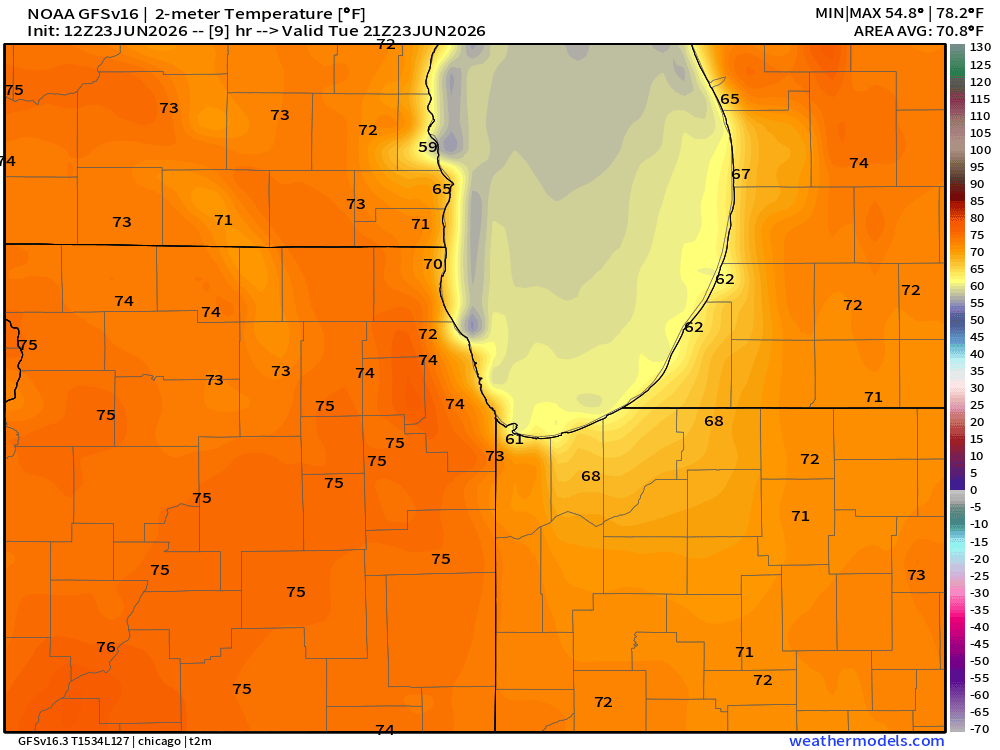
Finally, Lake Michigan is generally the most well known of the Great Lakes. All of the Great Lakes also produce lake breezes, where wind flows from the Lakes onto land, cooling shorelines significantly. They occur when land and air temperatures are much warmer than water temperatures, and there is little wind to slow development. Lake breezes cool coastlines between 10 and 20 degrees, reaching 30 degrees if they are strong enough.
The Great Lakes are both a cultural corner stone and a significant weather component in North America. They provide cooling effects in the summer and heating effects in the winter, creating a more temperate climate surrounding them, as well as allowing for easy transport of goods across the region.